After I spent the whole night in the bathroom, Joel gave Bolivia’s largest city, La Paz, a Spanish name. ‘La Ciudad de Mierda’ literally translates to The City of Shit – and for us, that’s what it turned out to be. We used La Paz as a base for a week so that we could get ahead with work, signing up for adventures outside the city limits every few days to keep ourselves sane. The city has been a real low point in our travels so far – we just found it so darn hard to enjoy ourselves. Whenever we ventured out into the city streets to search for a meal that wouldn’t make us sick, we’d be almost asphyxiated by traffic fumes. The footpaths were pandemonic; we’d be dodging traffic and people on the skinny, slippery paths. To make things worse, La Paz sits at an altitude of 3,700m – as high as Mt Cook in New Zealand. The steep hills and windy streets had us puffing after the first few metres, and for a couple who prides themselves on being fit and strong, this was not something we enjoyed at all.
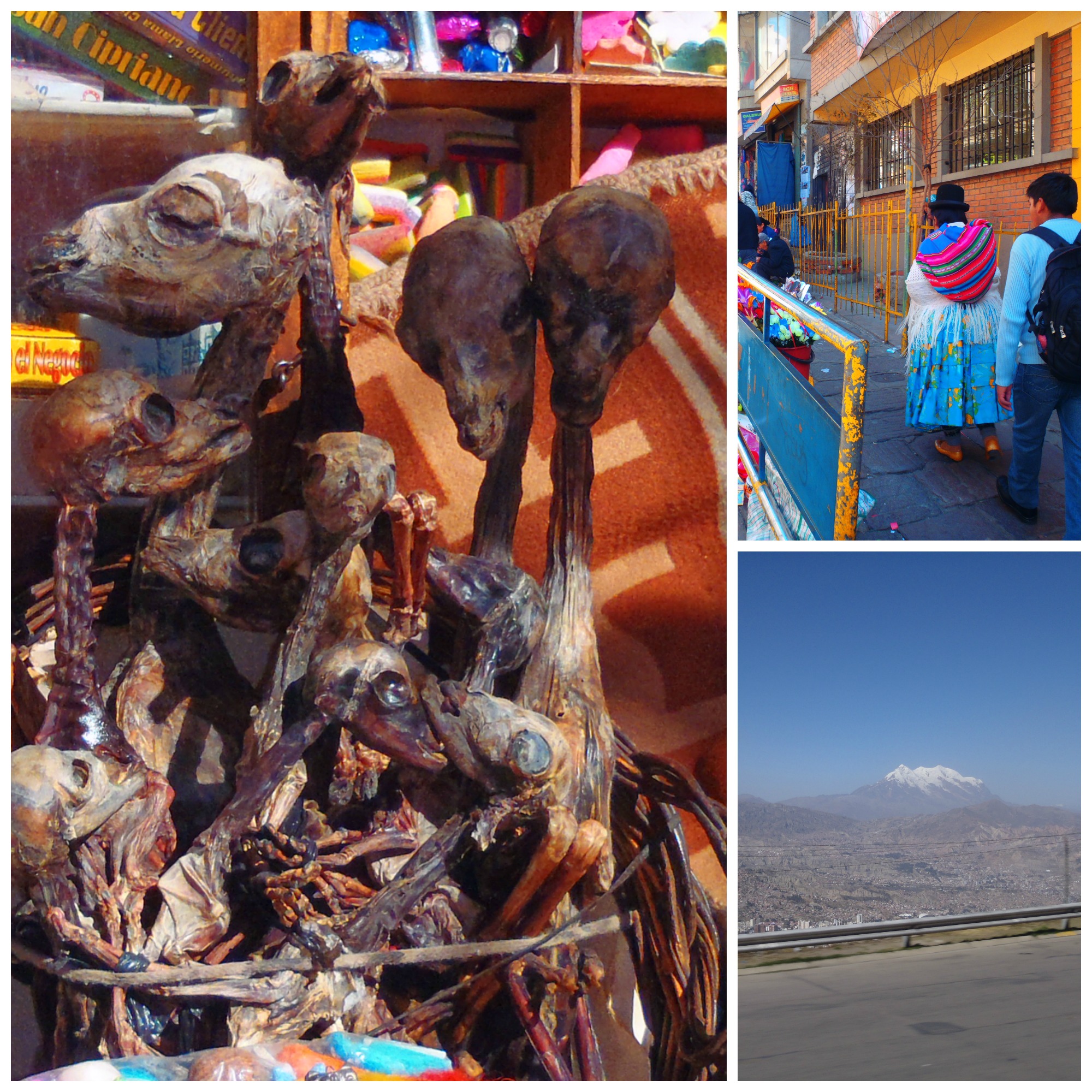
Perhaps we’re being a bit harsh. La Paz wasn’t all bad. The ‘Mercardo de Brujas,’ or Witches Market, was fascinating. Dried llama foetuses, used in ancient Incan spells, lined the narrow cobblestone streets; lined up against beautifully colourful scarves, jumpers and rugs, it was a feast for the eyes. Tiny Bolivian ladies, traditionally dressed in voluminous skirts, would softly try to sell us their wares; their hugely rounded bodies taking up most of the room in the small shop spaces. One day, while searching for lunch, we stumbled upon the local fruit market. Potatoes of every kind you can imagine sat next to avocados the size of baseballs, huge pumpkins, bright oranges and delicious arrays of nuts and olives. It was a sight for sore eyes amongst the La Paz concrete jungle. Finally, the geography of La Paz is pretty spectacular – the city tumbles into a valley of sheer, red canyons and is surrounded by sky-scraping Andean peaks. From afar, the city is beautiful – it’s only when you stumble into its belly that things don’t seem so rosy.
Every few days we just had to escape, if only for some fresh air and open spaces. Adrenaline seekers that we are, we signed up for the Death Road – this 65-kilometre stretch of gravel in the Bolivian Yungas, a jungle high in the Andes mountains, is known as the most dangerous road in the world. Before it was closed to mainstream traffic in 2006, it claimed an average of 250 lives per year. Trucks and cars would veer off the edge of hairpin turns trying to avoid oncoming traffic or backing up along sketchy edges to create passing space. As a result, the road is lined with small stone crosses and altars, and in the valley below lies the wreckage of mangled vehicles.

These days, the road isn’t as dangerous. It’s closed to all mainstream traffic, so it’s only the odd truck or car heading to one of the villages dotted along the road that risks passage. For mountain bikers, the dangers lie in the tour company you choose – we did our research and chose a company with great Trip Advisor reviews, modern bikes and good brakes. As a result, we had an awesome day. Others have not been so lucky – 19 mountain biking tourists have died on this same adventure.
I was one of the slowest in the group, preferring to take my time and enjoy the views – with Joel loving riding at the front and give the guide a run for his money. The change in altitude was spectacular. At the beginning of the ride, you’re freezing at 4643m above sea level, surrounded by snowy mountains and dry, alpine countryside. As the ride continues, the temperature increased and the foliage began to resemble a tropical jungle. By the end of the ride, we had stripped off all of our thermal layers and were wearing singlets, sweating under the summer-like heat. Once I got the feel of the bike, I found the whole ride more enjoyable – beautiful waterfalls, rivers and panoramic views made up a large part of the journey.
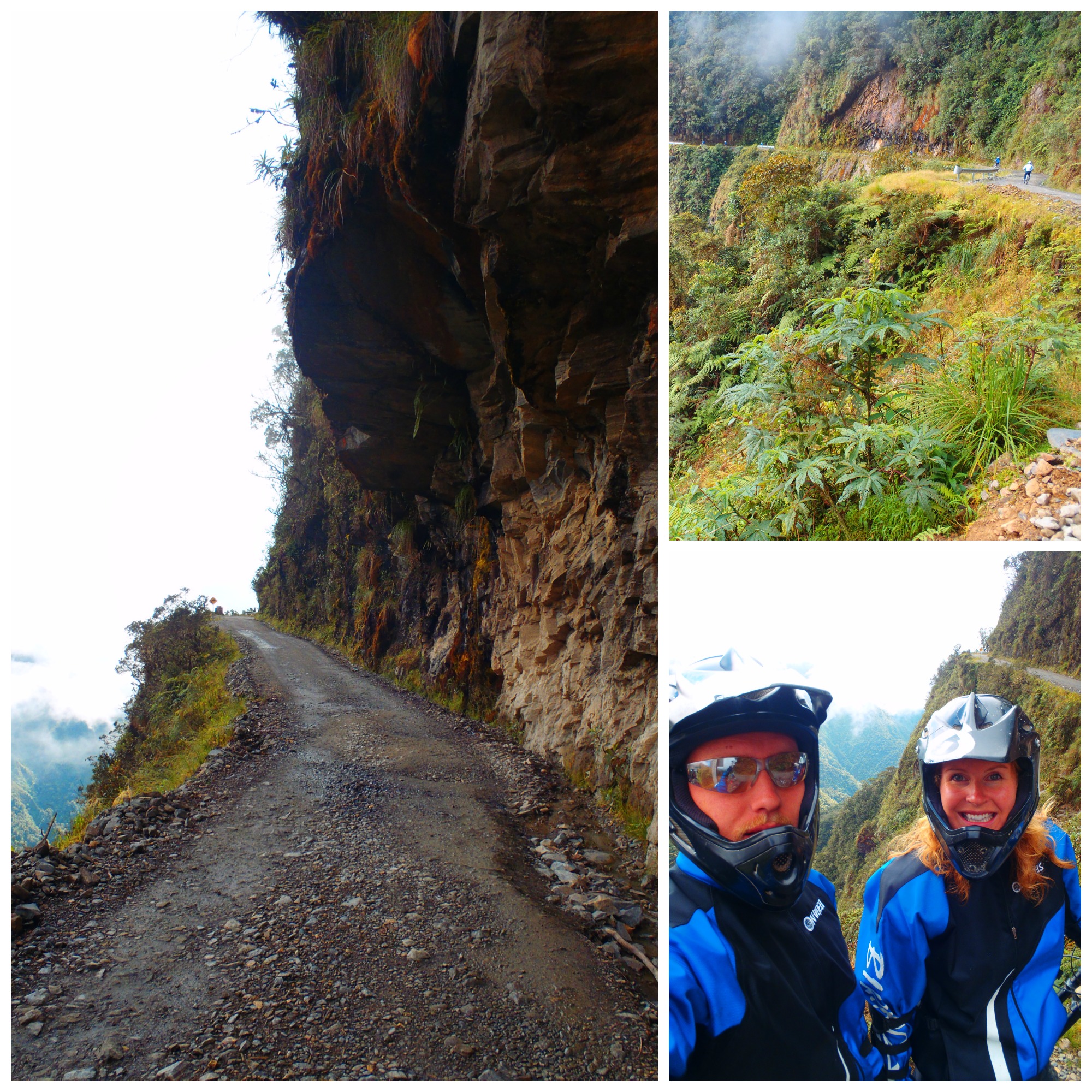
As we rode into Coroico, the village at the bottom, Joel and I high-fived. We had survived mountain biking the most dangerous road in the world, and we had enjoyed every minute of it.
After the Death Road, we spent a few more days in La Paz before booking a 3-day mountaineering adventure up nearby Huayna Potosi. I had summited my first peak in the Indian Himalayas a few years ago, and I was keen for the same rush and excitement as before. Joel agreed reluctantly– at 6088m altitude, he was wary of the lack of oxygen and our non-existent snow climbing experience.
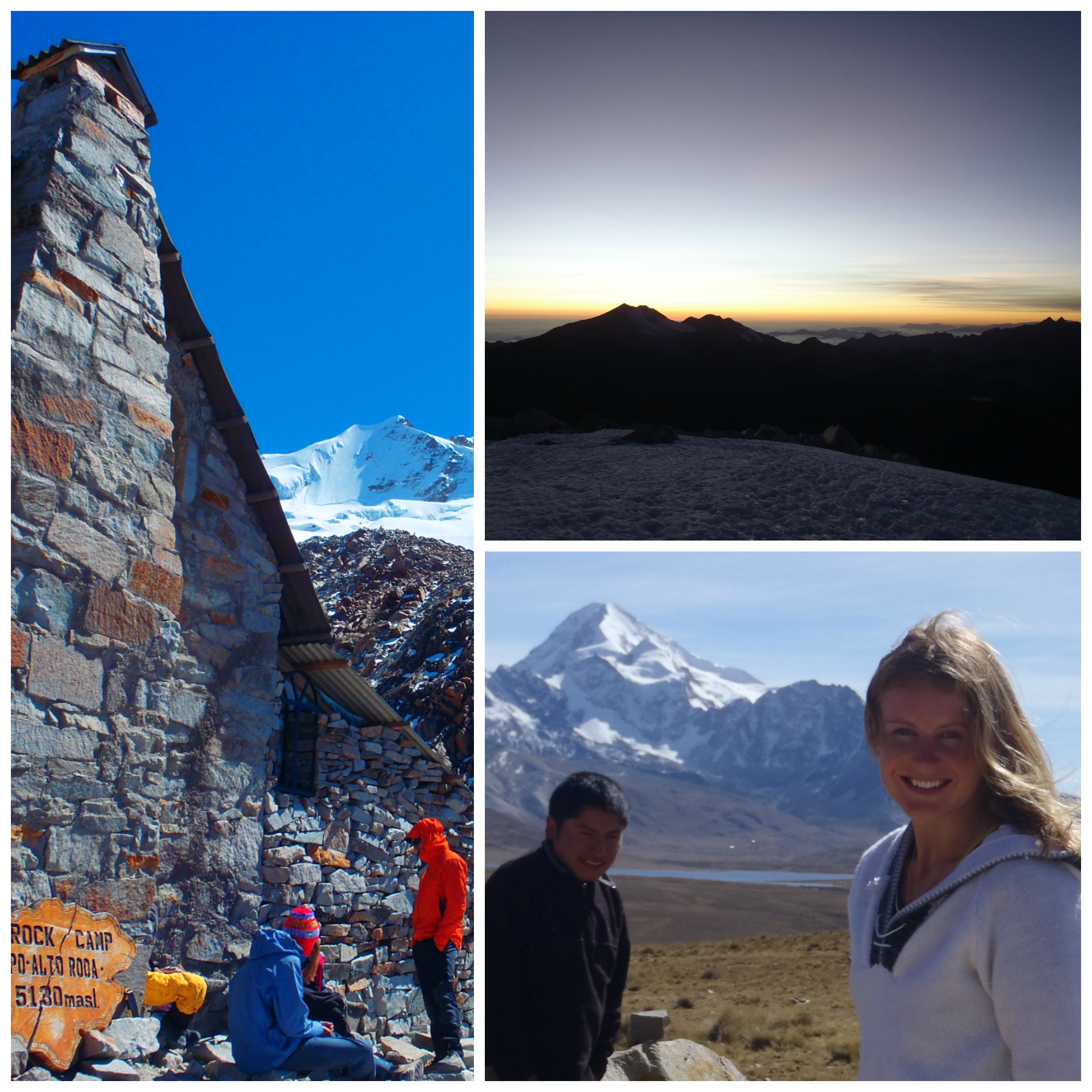
We spent a night acclimatising in a mountain lodge at 4800m before hiking for 3 hours up to high camp at 5200m. Up at high camp, the views were incredible – we were above the clouds, and the emerald-coloured tarns and snowy peaks that surrounded us were spectacular. What we weren’t counting on was how crowded high camp would be. Every dorm bed was taken, and nobody spoke English. We settled in to an uncomfortable night with only ourselves for English-speaking company. We were to be woken at 1am for the summit attempt.
I didn’t sleep a wink, a migraine-like, altitude induced headache kept me awake the whole time. It was so bad I had to try not to whimper so that I didn’t wake up the other climbers. 1am arrived, and I geared up in tears before taking paracetamol and an altitude pill – both working like a treat. Before I knew it we were making our way up the mountain, panting with the lack of oxygen and admiring how pretty the stars looked when we were this close to heaven. As time went on, the mountain got steeper and steeper until we were climbing 70-degree ice faces with sheer drops to either side. I freaked out – my legs seizing under the terror – and insisted we go back. We only had 200m to the summit, but I felt like going on was near suicide. Joel reluctantly agreed (he was enjoying himself and was feeling fit and strong) and we turned around, admiring one of the most beautiful sunrises we’ve ever seen on our descent. Back at base camp, I promised Joel that we would never attempt another high-altitude climb again – my naivety had been silly, and Huayna Potosi had taught me a lesson. From now on, I’ll stick to wilderness treks and mountains that aren’t covered in snow and ice.

Tonight we’ve just reached Copacabana on the shores of Lake Titicaca. Our spacious hotel room ($24 Kiwi a night) looks out to the lake’s expanse, and the WiFi is strong – which means we can get lots of work done here. Copacabana is a small town that’s steeped in Inca history, and we’re planning to spend the next week exploring before meeting mum in Peru. I’m looking forward to working on our sunny deck all day tomorrow in front of that beautiful view. Travelling has its ups and downs; but right now, I wouldn’t want to be anywhere else in the world.
 Journeys in my jandals
Lovely to read your adventures and super pleased you made some good calls along the way. Thinking of you both and hoping that those good calls are always mad just in the nick of time. Got the all blacks tomorrow night. Much love, Chris
I love reading your story love from dad
Thanks Dad! Looking forward to seeing you at the wedding. x
what the f .you can swim but you can’t fly ,,stay off vertical spaces your giving me vertigo xxxdad
Hi Joel and Aly, so pleased to be able to enjoy your journey safely from the Pohangina Valley. I hope that you are feeling better and you are able to enjoy the rest of your stay. Keep safe. Love Louise, John, Ruby, Belle and Vienna