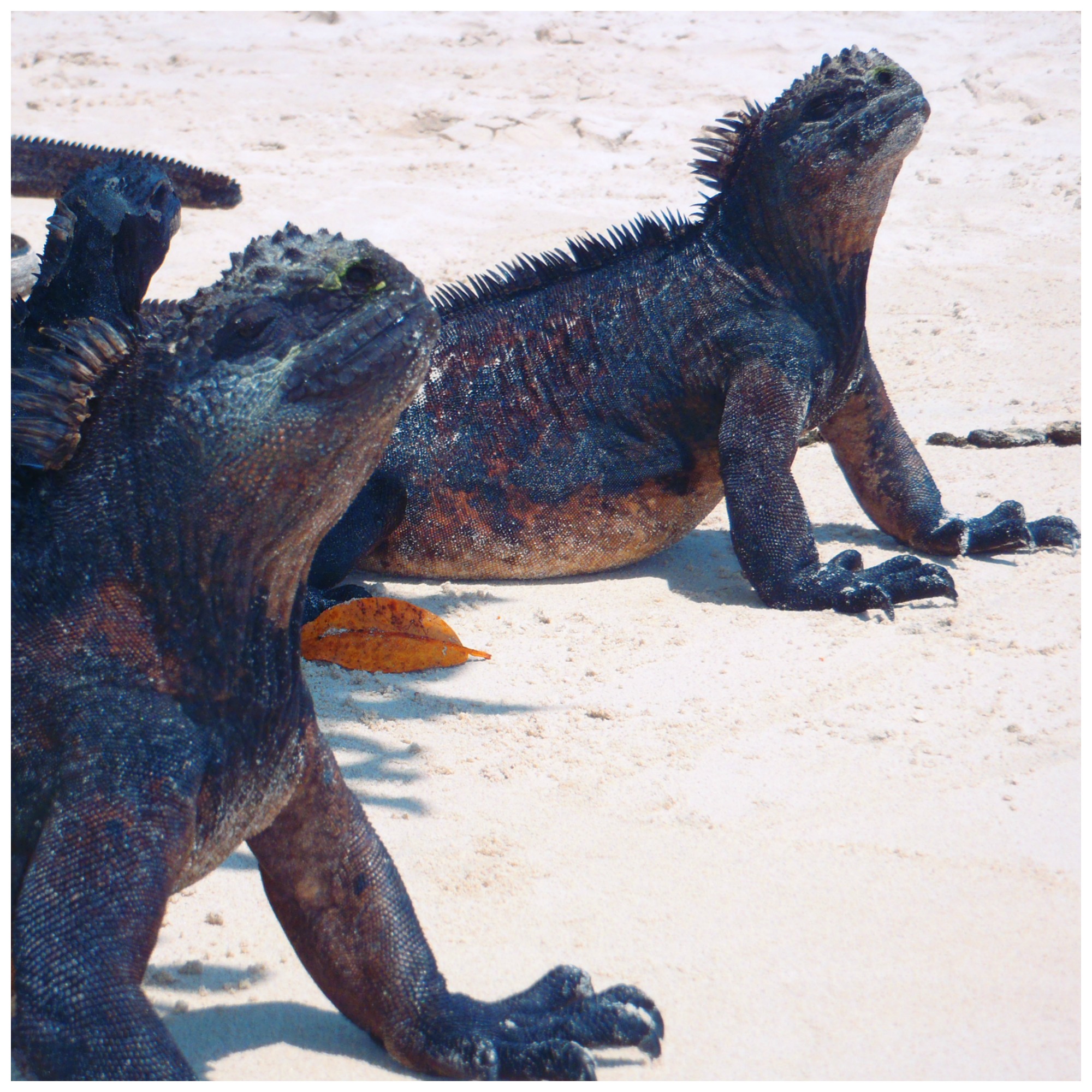
On my run this morning, I saw a sea lion giving birth to a tiny pup. Birds with blue feet looked on from a rocky volcanic outcrop, and on my way back to our hostel I almost stepped on three black marine iguanas. No, I didn’t have a big night last night and I’m not hallucinating – this is a normal start to the day in the Galapagos Islands, an enchanting, Alice-in-Wonderland style place that’s 1,000 kilometres off the Ecuadorian coast.
This remote and wild archipelago is lost at sea, and David Attenborough will confirm that perhaps no other place in the world conjures such fascination amongst nature lovers as the Galapagos.
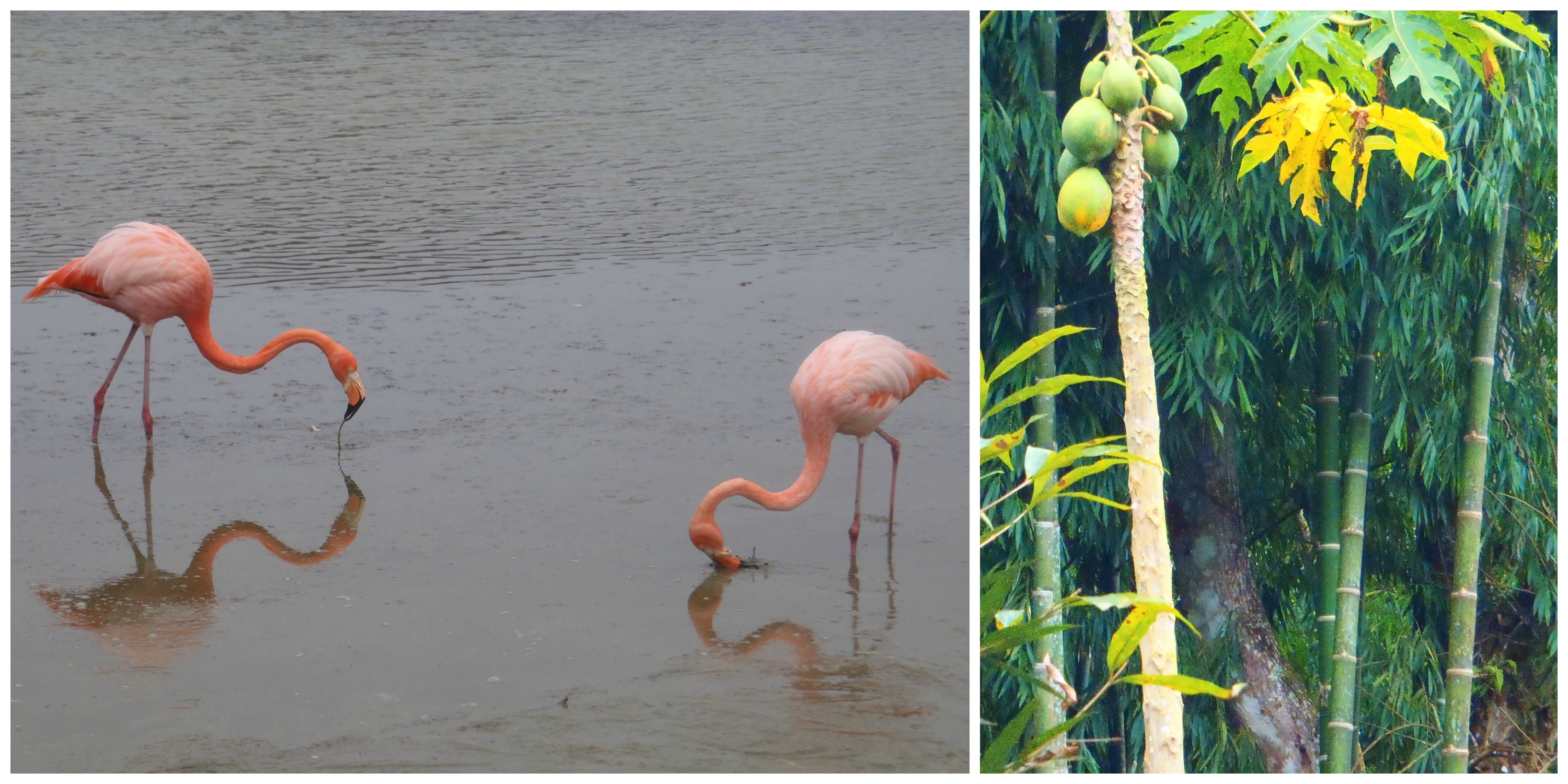
Regardless of how thoroughly we research a destination beforehand, the true character, scale and atmosphere is never fully revealed until we experience it first hand and in full technicolour. So, for the last ten days we’ve been trying to get a grip on these very special islands, a place we were not prepared to miss out on during our South American odyssey.

Flying in to Baltra Airport, we first noticed the sheer vastness of the Islands, the solid lava flows, alien foliage and endless scoria. And then there were the clouds; beaten away by a hot sun in the lowlands but holding the fort steadfastly in the hills, which climb to surprising altitudes. The sniffer dogs at the airport gave our bags a well researched pass and we set off in a bus for the far side on Isla Santa Cruz – it was time to meet some locals, try the food, walk blue water beaches and, with great anticipation; uncover the unique wildlife.
Yogo, a friendly local guy who spoke great English, greeted us at our first hotel, an outfit with a private kitchen and lounge that we were pleasantly surprised by. In a nearby dive store we got chatting with a French diving guide, Cedrik, who had a lot of local knowledge, having been the first dive instructor in Ecuador and the Galapagos. He gave us a few suggestions on things to do and places to see, as well as the name of a friend of his called Roby, who just happened to have a brand-new two story house in the jungle that was up for rent. Roby turned out to be an Argentinean, semi-rasta dive instructor who had settled here over fifteen years prior.
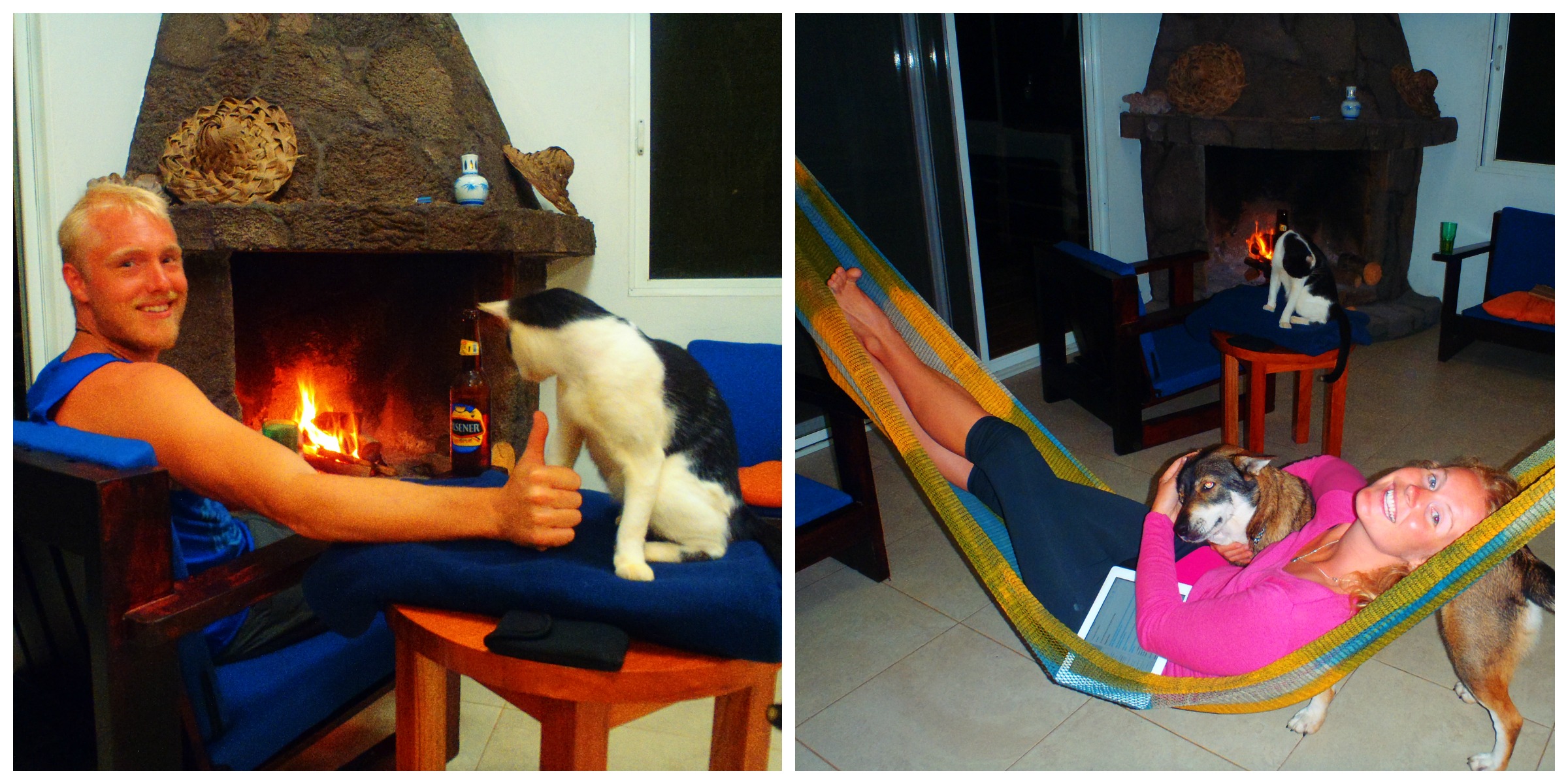
His house was beautiful, with three bedrooms featuring sea views, a fireplace, great kitchen and multiple hammocks, so we took it over for 5 nights and invited some new pommy friends to join us for the sake of a more social experience. Our new abode looked out over a lush tangle of banana trees and tropical hibiscus towards the ocean in the distance. We were somewhat isolated from town; but we liked that aspect of it and the place had some real charm. One of the things we enjoyed the most about our stay here was Roby’s two cheeky, friendly pets – Shak the cat and Lucy the dog. These guys were just awesome. Shak was unstoppable in the kitchen; lean and wiry, he voraciously consumed ALL edibles – from uncooked rice and potato to green beans, porridge and big outdoor cockroaches. Lucy loved company; her different coloured eyes and cuddly nature made her a good mate to have around.
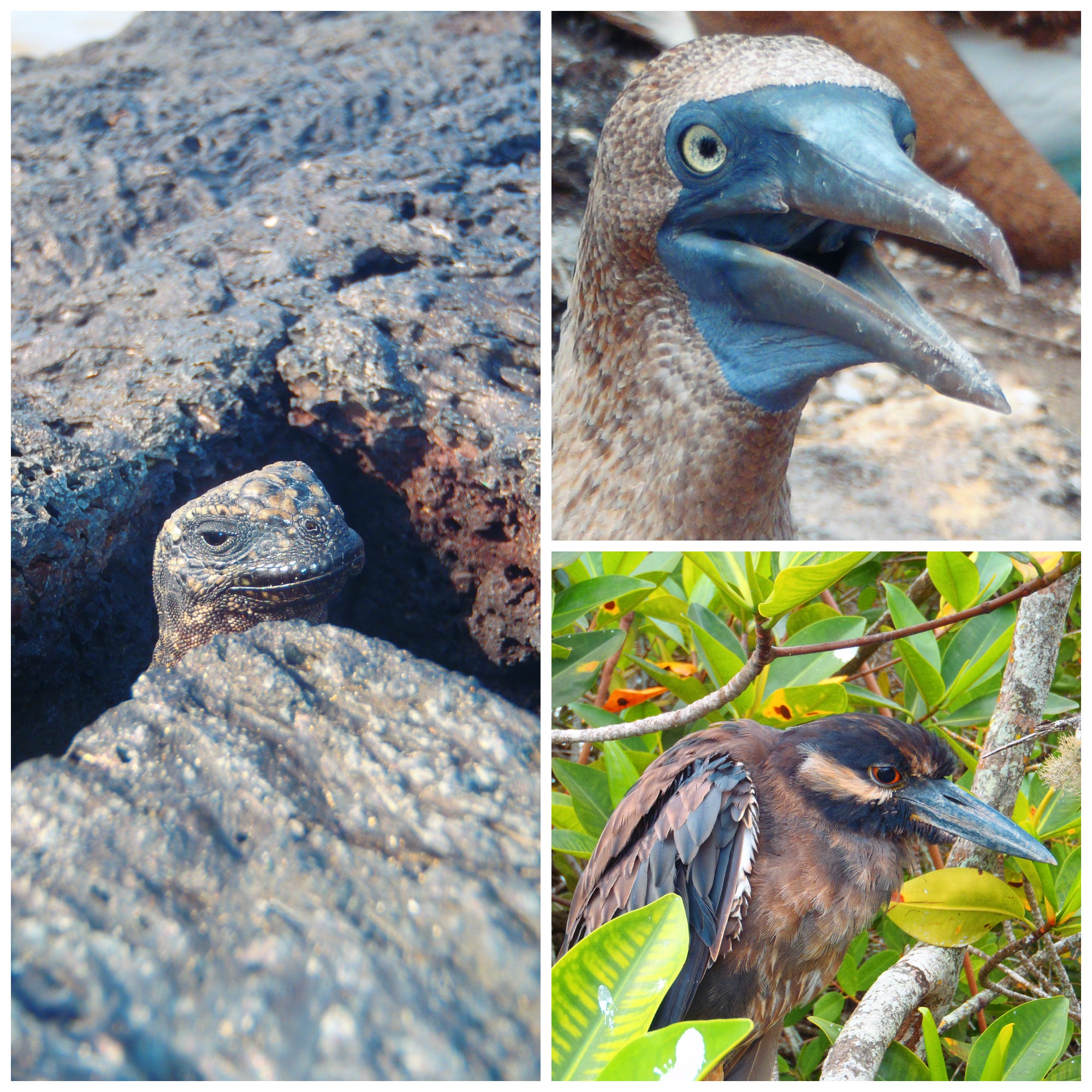
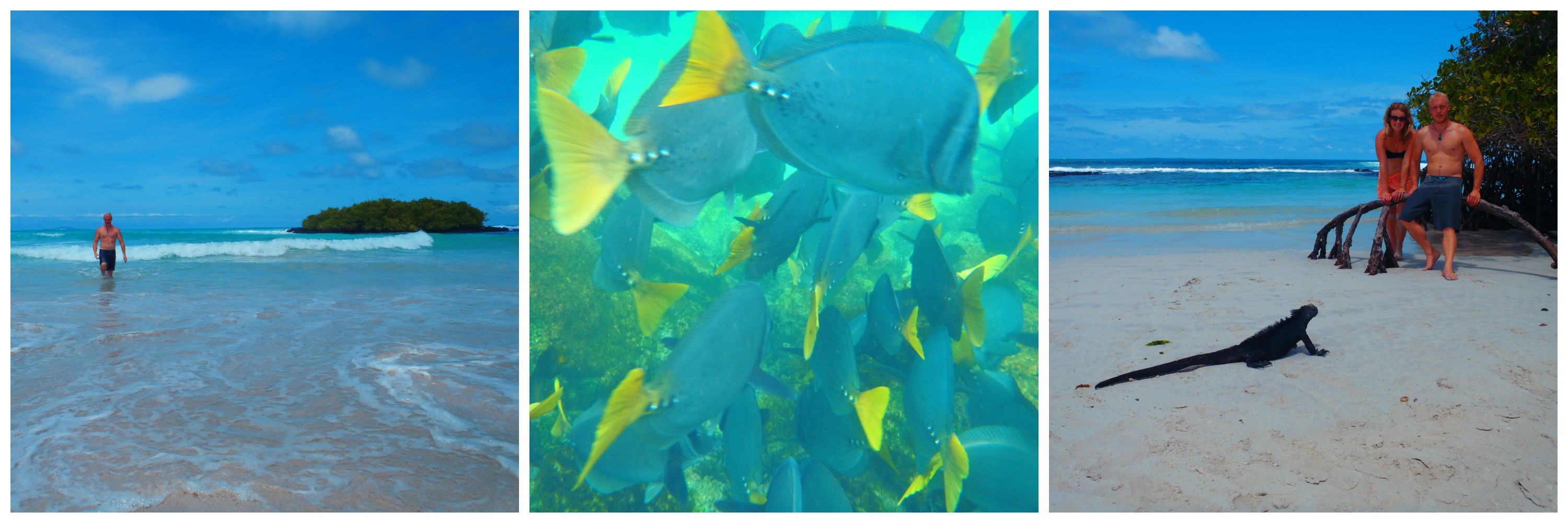
The aquamarine and teal blue water of Tortuga Bay was the highlight of our stay on Santa Cruz. This beach was crawling with marine iguanas, the sand was a fine, golden powder, and a fairly constant swell made for some fun body surfing. In spite of the fact it is high season at the moment, the town of Santa Cruz itself was pretty flat and lacklustre. Fresh fruit, vegetables and meat was noticeably unavailable so despite being excited about cooking for ourselves in our new house, the appeal was pretty limited. Restaurants here were not great either and prices were, not surprisingly, pretty high. But for a while, none of this really mattered when you could walk onto the pier or sit anywhere seaside and immediately see Iguanas, sea lions, turtles, pelicans and boobies of the blue footed variety.
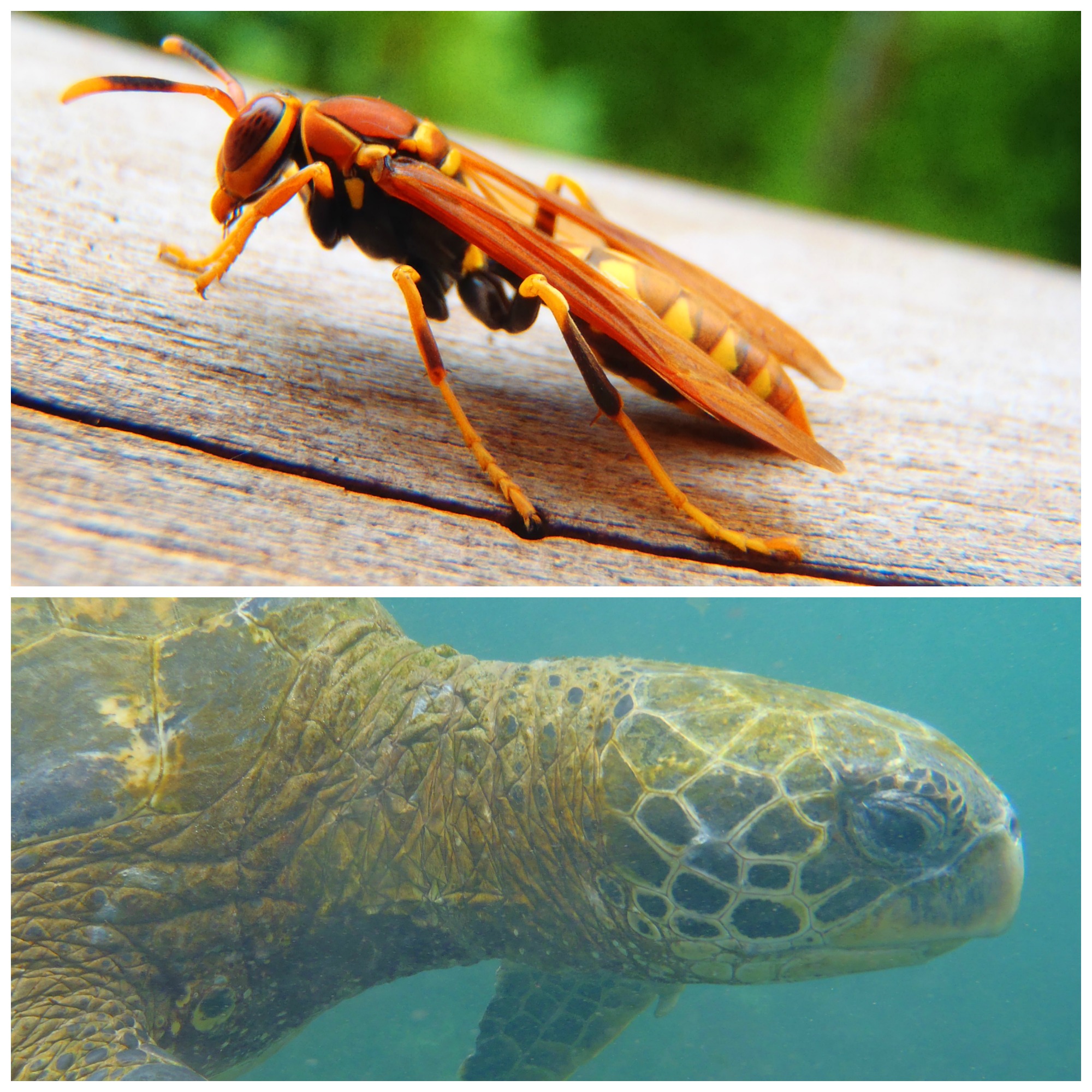
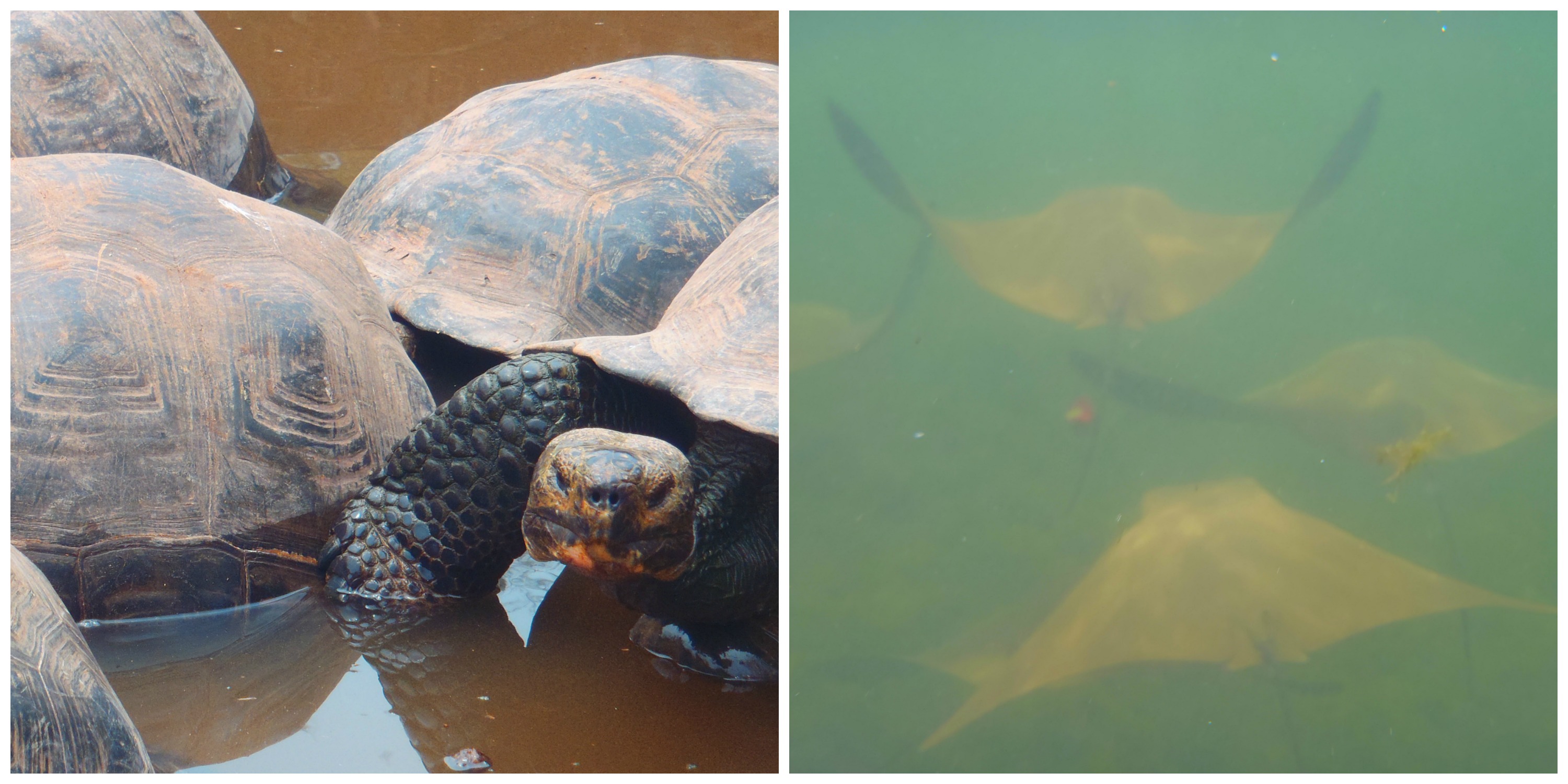
On a stroll around the waterfront we checked out the local tortoise breeding centre where hundreds of these land walking giants are contained in large outdoor enclosures. Adults can reach 250kg and often live longer than humans. They also seem to like sex – a large couple we busted in action were pretty hard at it, only thing was he had got the wrong end which led to his missus’ retracting her head back into her shell for some respite. Tortoises have formidable looking beaks.

Joel, being the outdoors man that he is, spotted some cute-looking apples under a leafy tree. Suspecting they could be poisonous he nominated a self-sampling session to see what these little guys tasted like. He described the initial taste as being quite sweet, but then declared the after-taste to be seriously vile. A quick Google search back in our room revealed that he had taken a bite out of the notorious Manchineel Tree, labelled the ‘deadliest tree in the world’ by the Guiness World Records. Oh, crap.

Somehow, he brushed it off with surprisingly mild damage and avoided the Emergency department and possible death. Joel recommends the Manchineel Apple for those seeking an exciting and unique culinary delight in the Galápagos Islands. After this funny experience, it was time to get myself and my troublesome ‘novio’ off Santa Cruz and take the one hour fast boat to the big Island of Isobela.

La ‘Bar de Beto’ (the bar of Beto) was our chosen resting place for our time on Isobela and our spacious room was located on the absolute beach front. 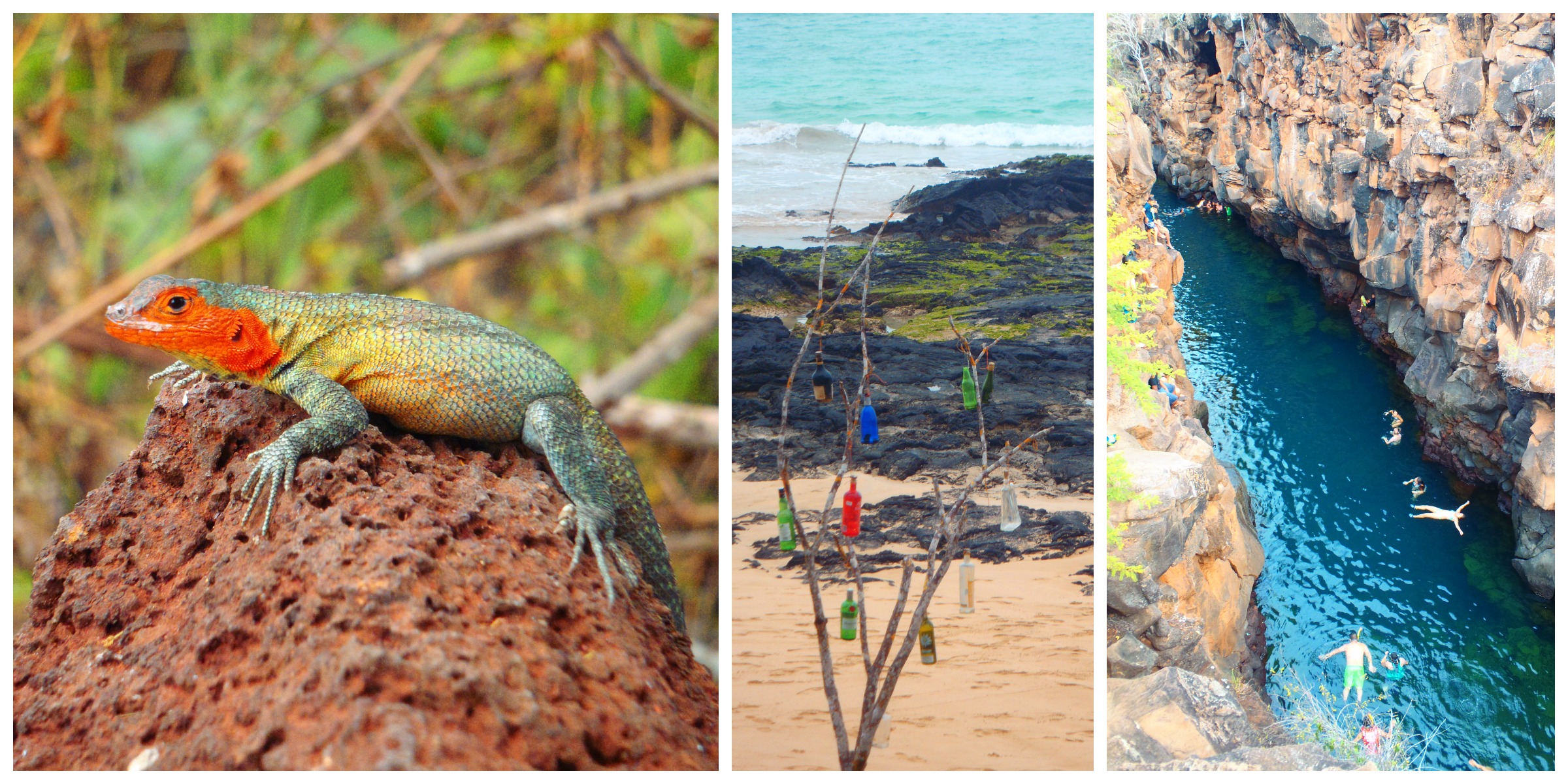
From here, we embarked on what was our favourite tour, to the Tuneles or ‘lava tunnels’ where we discovered some of the coolest wildlife inhabitants on the archipelago. Thriving sea turtle populations (which nest on many Galapagos beaches), reef fish, various types of manta rays, seahorses, blue footed boobies, penguins and a lot of sharks, all at extremely close quarters. We swum into a cave, and Joel dived down for a pretty confrontational photo with a good sized shark!
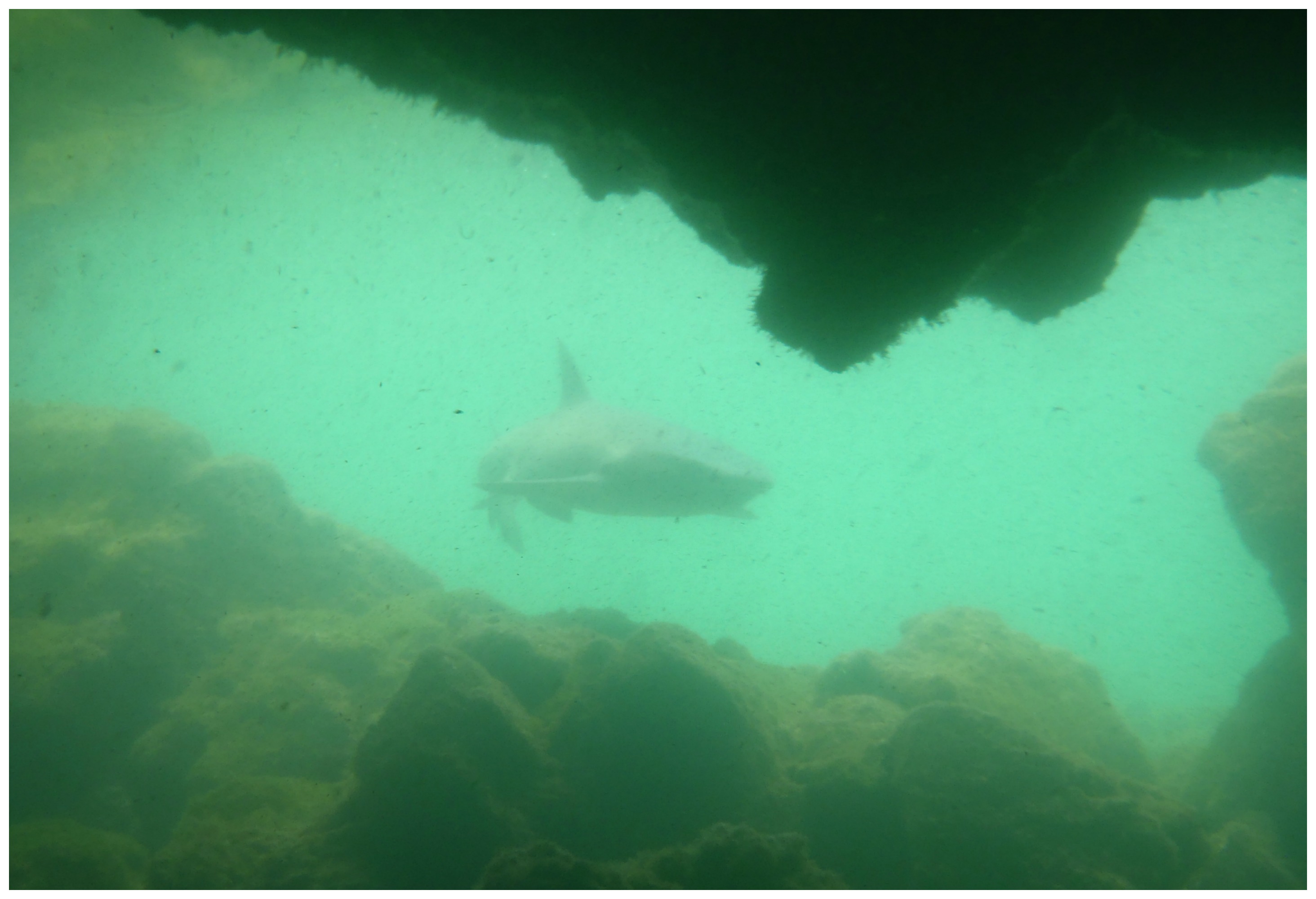 Three major currents converge on the Islands, bringing with them an abundance of marine life. Vast clouds of plankton drift in from as far away as Papua New Guinea, blooming en masse from the iron deposits that leech into the water from the lava that formed so many of the islands here. Not surprisingly, these little critters form the basis of a very healthy food chain.
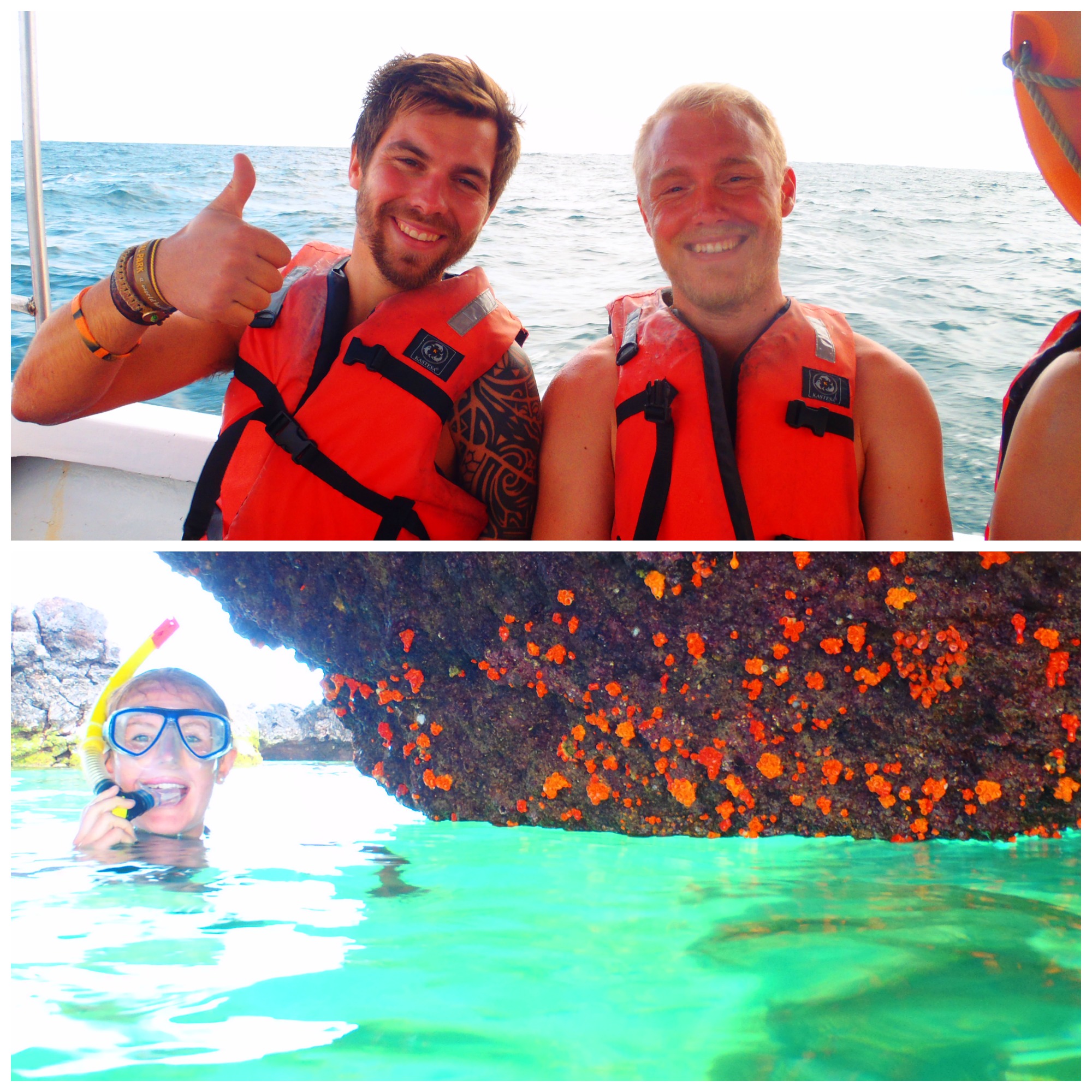
No wonder this place stimulated Charles Darwin’s famous theory of evolution – an un-disputable revelation in the face of such well adapted and evolved diversity, in both ocean and on land.
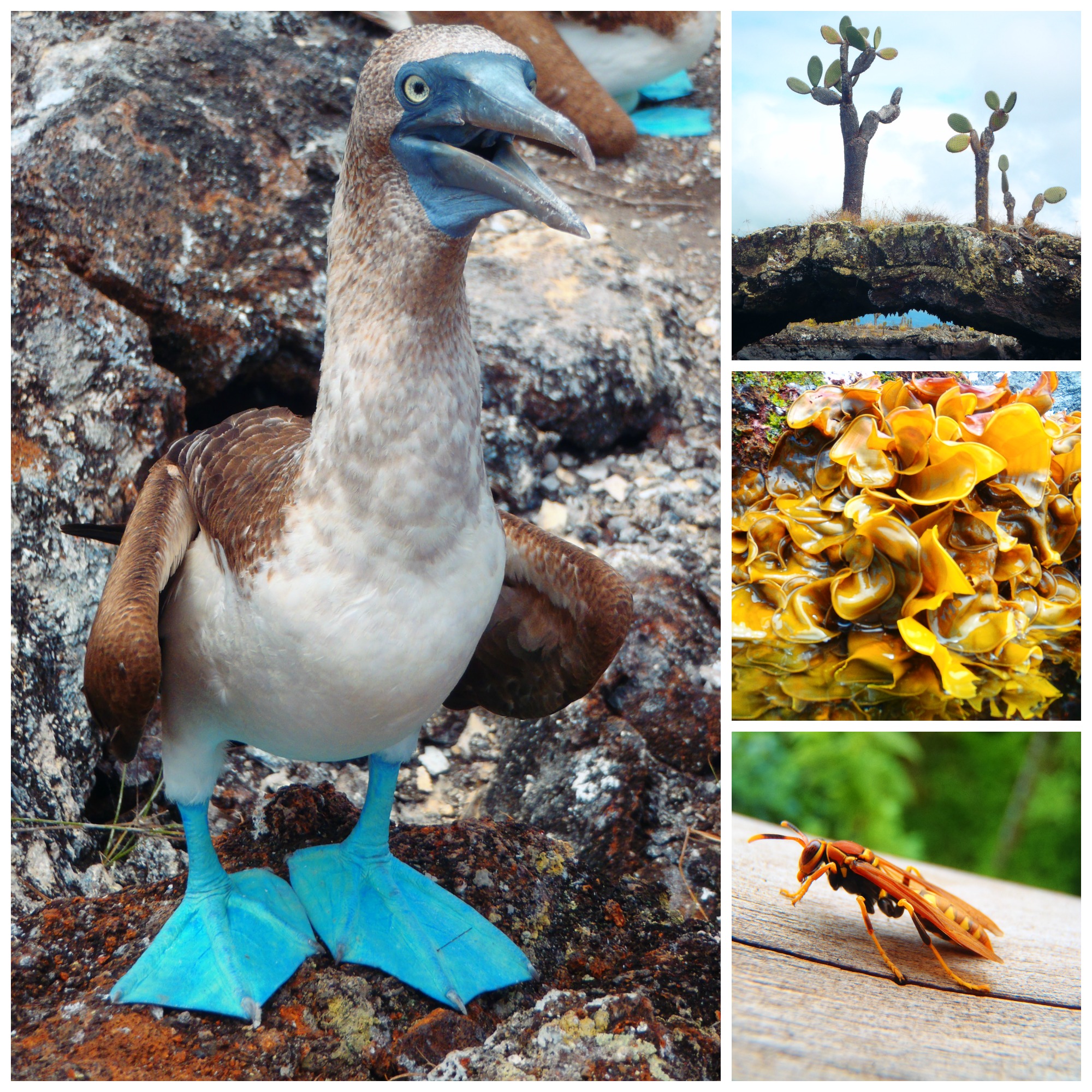
After a fun and enjoyable stay at Beto’s character-filled Beach Bar, we awoke at quarter to five for the early morning fast boat transfer to our next destination – Isla San Cristobal – a beautiful Island 4 hours from Isobela, to the far east of the group. Gazing in the direction of the ocean from our hotel window, we’re currently plotting a spot of surfing if swells allow, a snorkelling trip to the famed Kicker Rock and holding out the hope that we can find a beachfront shack to briefly occupy. We never know exactly what awaits us next, but we do know that this Island is cool and that we have five days to make the most of it before we head for the hidden reaches of the Amazon jungle on mainland Ecuador. Standby for the conclusion to our Galapagos adventure!
This is a hybrid blog written by both of us. Joel’s passion for wildlife, science and wilderness combined rather well with my love for a bloomin’ good read, Galapagos style. Hope you enjoyed it.
 Journeys in my jandals
To reduce our already bulky luggage, we didn’t bring an SLR camera, but we are doing our best with a basic compact – which is tricky at times! Perhaps we will add a proper camera to our travel kit when we reach the USA, but for now, this old thing with its underwater capability will have to suffice. Hope it’s getting the picture across ok. Joel
Pingback: Celebrating the Journey: Month 5 Round-Up | Journeys in my jandals