We’ve just returned from a 4-day tour of southwest Bolivia, experiencing volcanoes, radical rock formations, lagoons and ancient sea beds; all set above 3700 metres. We’ve covered a vast and isolated landscape, our journey totalling more than 1000 kilometres. Bolivia has been a mind bend so far. Here are three stories from our journey.
Bolivian snowstorms
It’s mid afternoon, and Joel and I are stuck in a snowstorm in the middle of south-west Bolivia. Outside the jeep, the temperature is -17C with wind and snow gusting at 140km. Altitude 4750m – as shown on the altimeter which is on it’s second time around the clock! We’ve broken down in the middle of nowhere, our driver has gone in search of help and freezing, white fog is closing in. Joel turns to me.
“Alli,” he says, eyes shining.
“We might actually have to spend the night here. I know exactly how we will survive. We’ll get the sleeping bags off the roof, and we’ll put the seats down, lay out the thermarests, remove a few layers of clothing and we’ll all cuddle for warmth. We have food and we have red wine. This is such an adventure!”
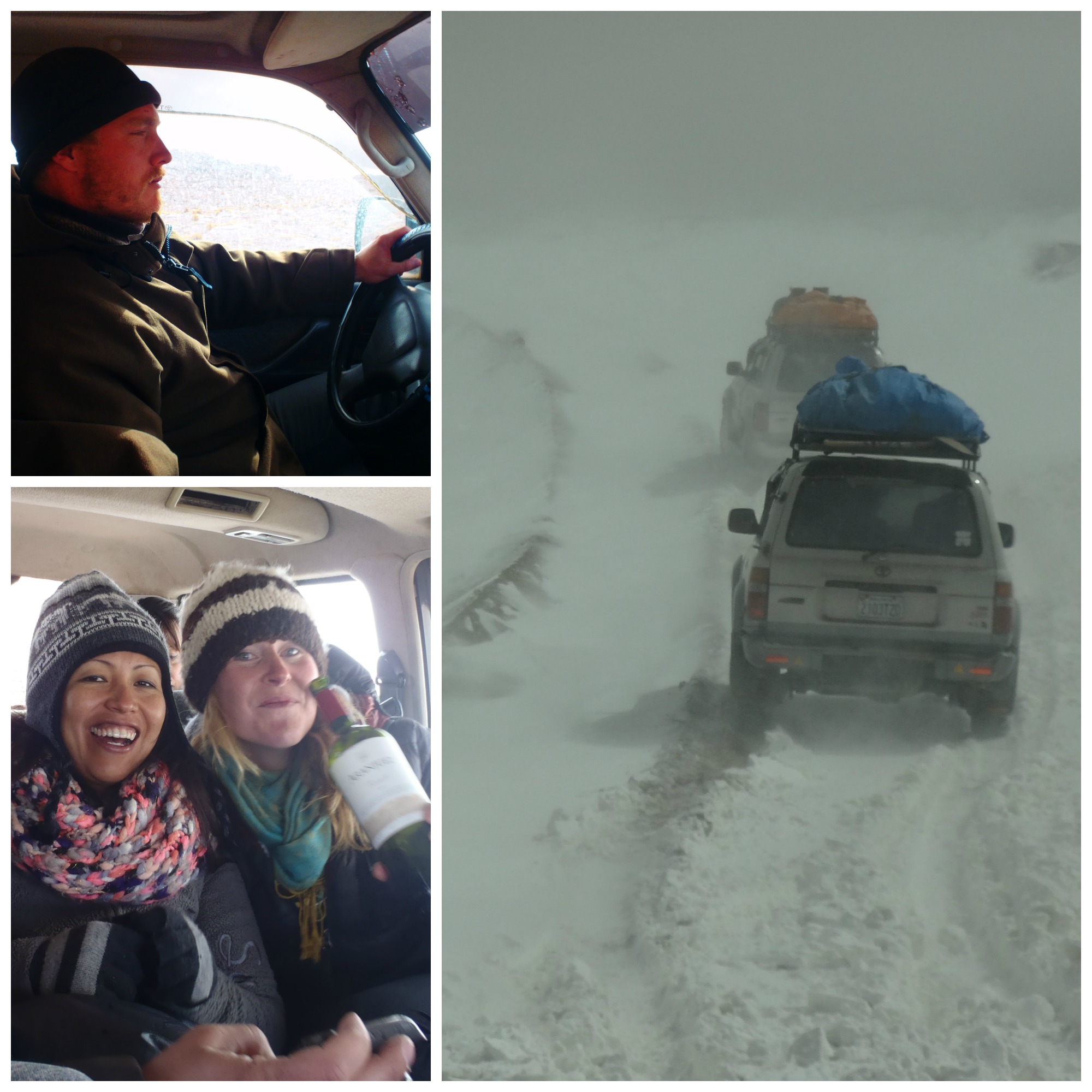
I swear Joel actually wanted the snow to close in so the guide couldn’t find us again. This way, he could demonstrate his survival skills when we had to spend a freezing night in the middle of nowhere. These adventure-loving Tarzan skills were something I usually loved about him; but at that moment I couldn’t feel my feet, and I was crossing my fingers that our guide, Julio, would emerge out of the fog ASAP. I had been holding on for a pee for hours and it was beginning to get uncomfortable, so I opened the door to brave a squat outside.
The door nearly flies off the hinges, a freezing gust of wind bursting into the jeep, awash with snow and ice. I push on and do my business in front of the bonnet. Standing up to walk back to the door, I hardly make any headway. It takes me 20 seconds to walk 3 metres. Back in the jeep I start shivering uncontrollably, so our Swiss travelling companions suggest we crack open the red wine (made in Bolivia), taking turns to swig out of the bottle and snuggling together to stay warm.
An hour later, when the ice has frozen our windows and doors closed, our guide appears out of the fog with another jeep to jump-start us.
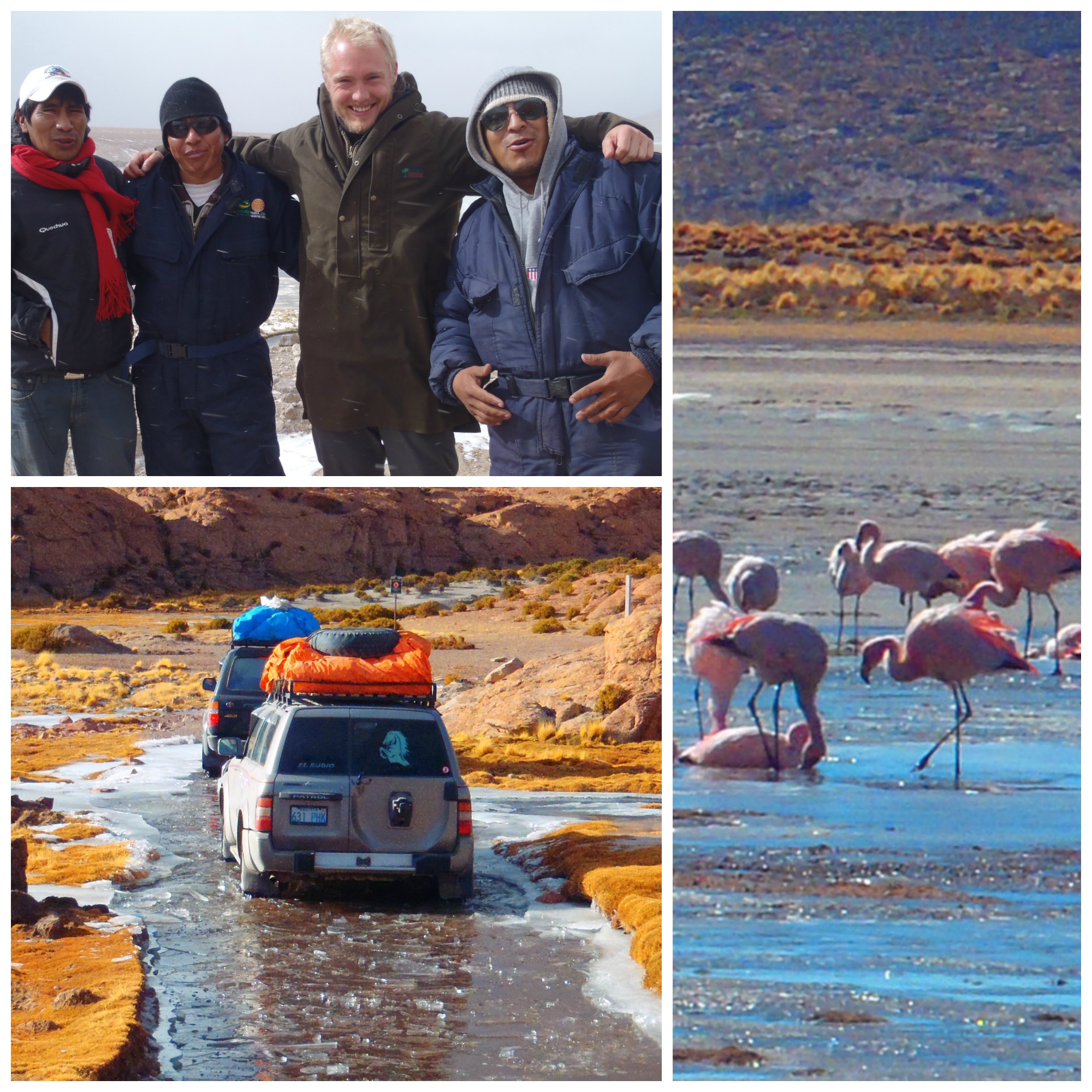
Welcome to Bolivia! We knew this country was pretty rustic and we were ready for a bit of adventure, but freezing to death in a jeep on our 4-day tour of Southwest Bolivia wasn’t really part of our plan. Thankfully, our jeep roared into life, and we made it through the snowstorm. One other jeep in our convoy wasn’t so lucky, and it was only when we passed through the national park checkpoint (2 hours away) that the guides realised there was one jeep missing – they had broken down in the storm, and the whiteout meant that nobody saw them in trouble. The guides decided immediately that one jeep was to go back to search for them.
“Conductor,” Julio says to Joel – ‘driver’ in Spanish, as he slaps him on the shoulder. Julio was to go back in the rescue jeep to search for the missing group. Joel takes over the wheel, and we continue onwards to our accommodation. Joel soon discovers that the jeep has no brakes, and no third or fourth gear – so driving to the small village we are thankful for his off-road experience.
That night, we rug up warm in front of the fire, worrying about the missing group – four young girls, and a local guide and cook – the whole time. It’s -17 outside, and the wind is still howling. We all know that if the group isn’t found, their lives could be at risk.
It’s 11.30 at night when two jeeps finally rumble into the village, and four freezing, tired young girls stagger into the room to a round of applause. We’re all ridiculously relieved, and the realities of travelling in such an isolated, third world place had sunk in. No radios. No GPS. No emergency plans.
The drug smuggling corridor
The next day, well-rested and well-fed, we tour through some impressive rock formations in the morning before heading out into the isolated, arid plains. There’s nothing here – no life, no people; nothing except the odd llama, ostrich or pecuna rising out of the landscape. Out of nowhere, a brand new white Ute roars towards us; a trail of bright red dust rising up in its trail. The tray is loaded with firewood, and there are no number plates. Freshly harvested from Chile, it turns out (aka stolen). The two shifty-looking passengers in the front seat avoid eye contact as they pass us. They are obviously in a hurry.
“Drug smugglers,” Julio turns to tell us with stony certainty.
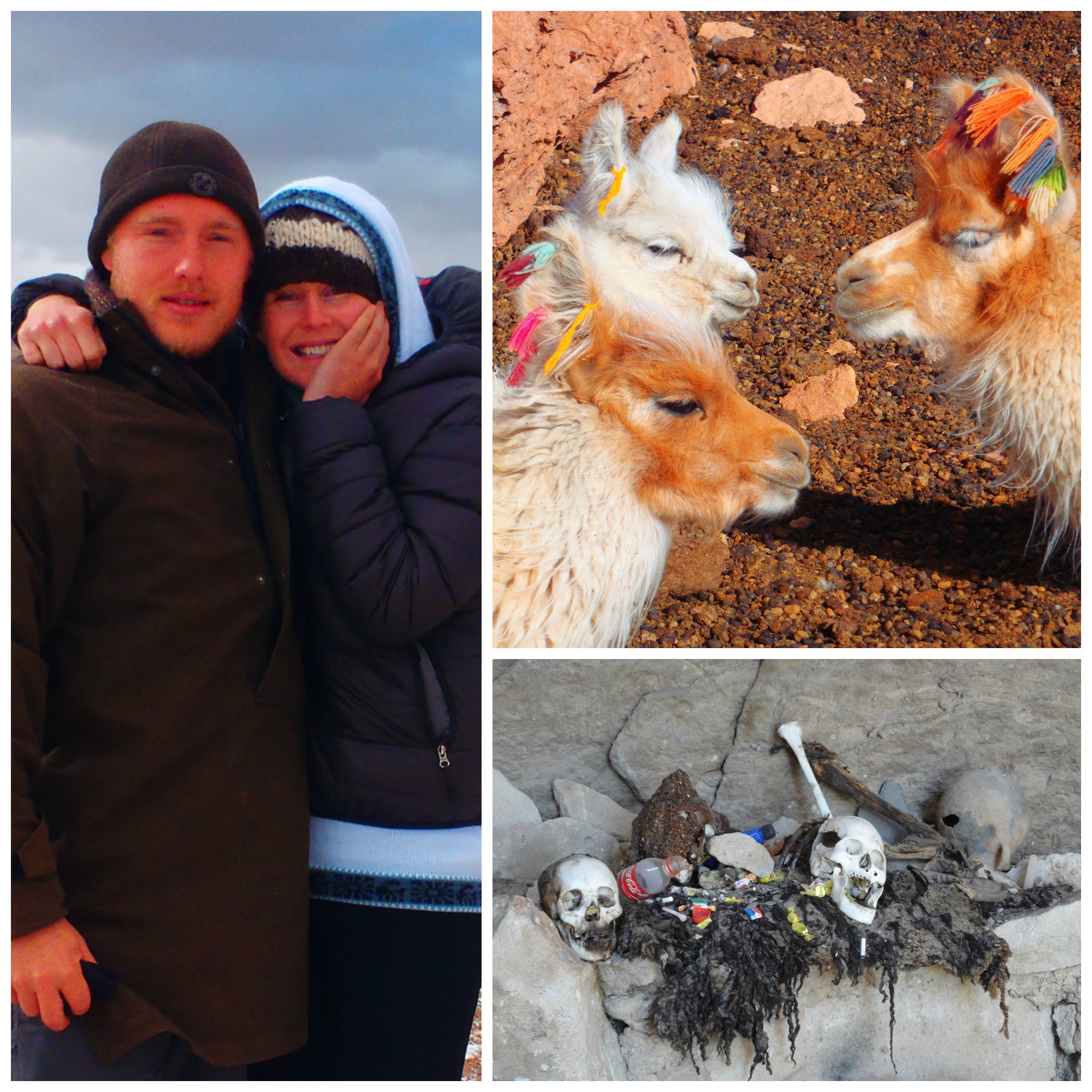
The sculls of unidentified pilots in the Bolivian high country
It’s common knowledge that these drug smugglers steal vehicles from Chile before driving them across the most isolated part of the border with Bolivia to pick up a load of cocaine. Our tour happened to drive through this isolated drug smuggling corridor, the absence of people and police making it straightforward for the smugglers to get the job done. Apparently, everybody who lived in the village that we stayed at the night before was also involved in the narcotics trade – there wasn’t any other way to make money in this part of the world. Suddenly, the face of the drug smuggling industry was the traditionally-dressed Bolivian woman with the braids and the kind face who had shown us our rooms in the village; not quite the hard-ass drug bandit I had imagined. Many of my preconceived notions of how the world works are being challenged on this trip.
Sunrise over the salt flats
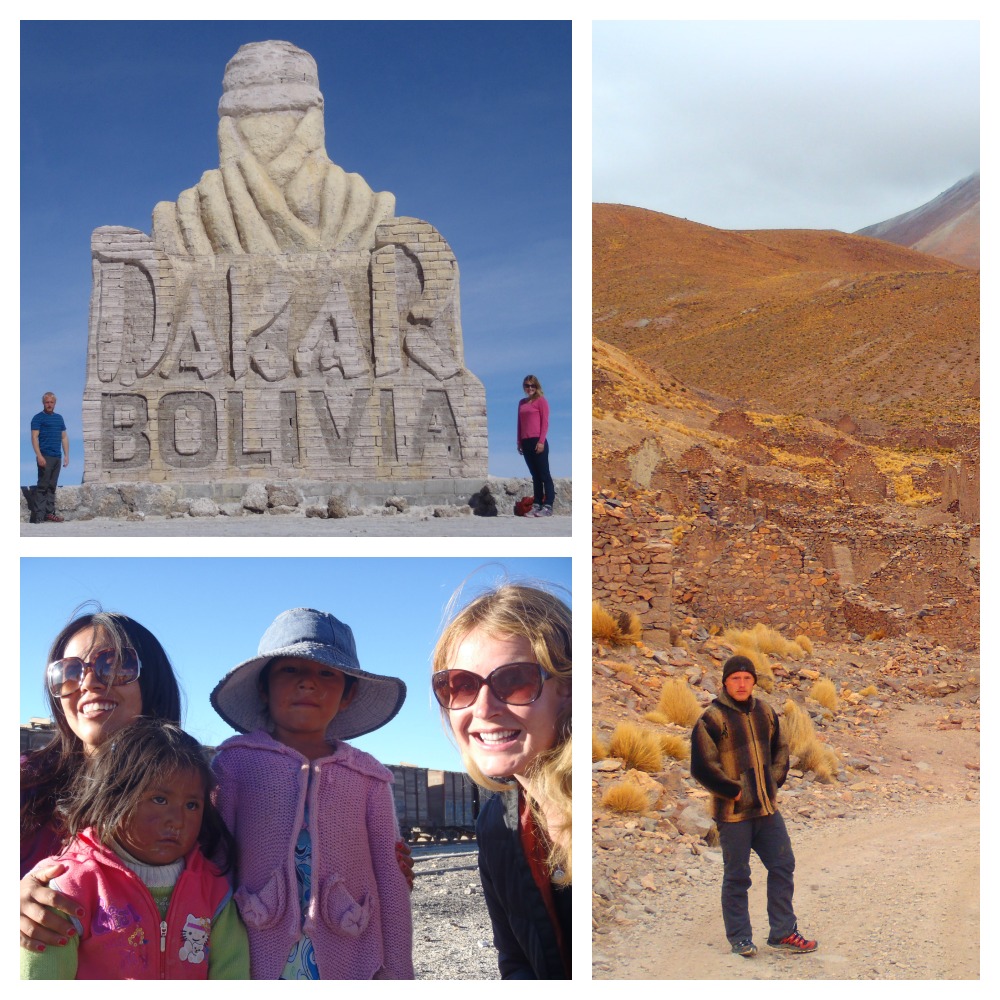
Our third and final night was spent in the salt hotel at the very edge of the Salar de Uyuni. The whole hotel was made of salt – salt bricks for the walls, salt crystals on the floor and salt tables and chairs. I had to lick the wall just to make sure they weren’t telling us any porkies.
After spending the night drinking (more) wine and watching shooting stars glide across the salt flats, we woke up at 5am for sunrise the next day. Driving across the salt flats – the remains of an ocean long since dried up – with rays of the sunshine reaching across the infinite sea of white, we had to pinch ourselves that we were actually here. Our happy grins lasted only until steam began to pour out of the bonnet of the jeep and the spraying radiator fluid froze on contact with the windscreen. We had broken down – and we were, once again, in the middle of nowhere.
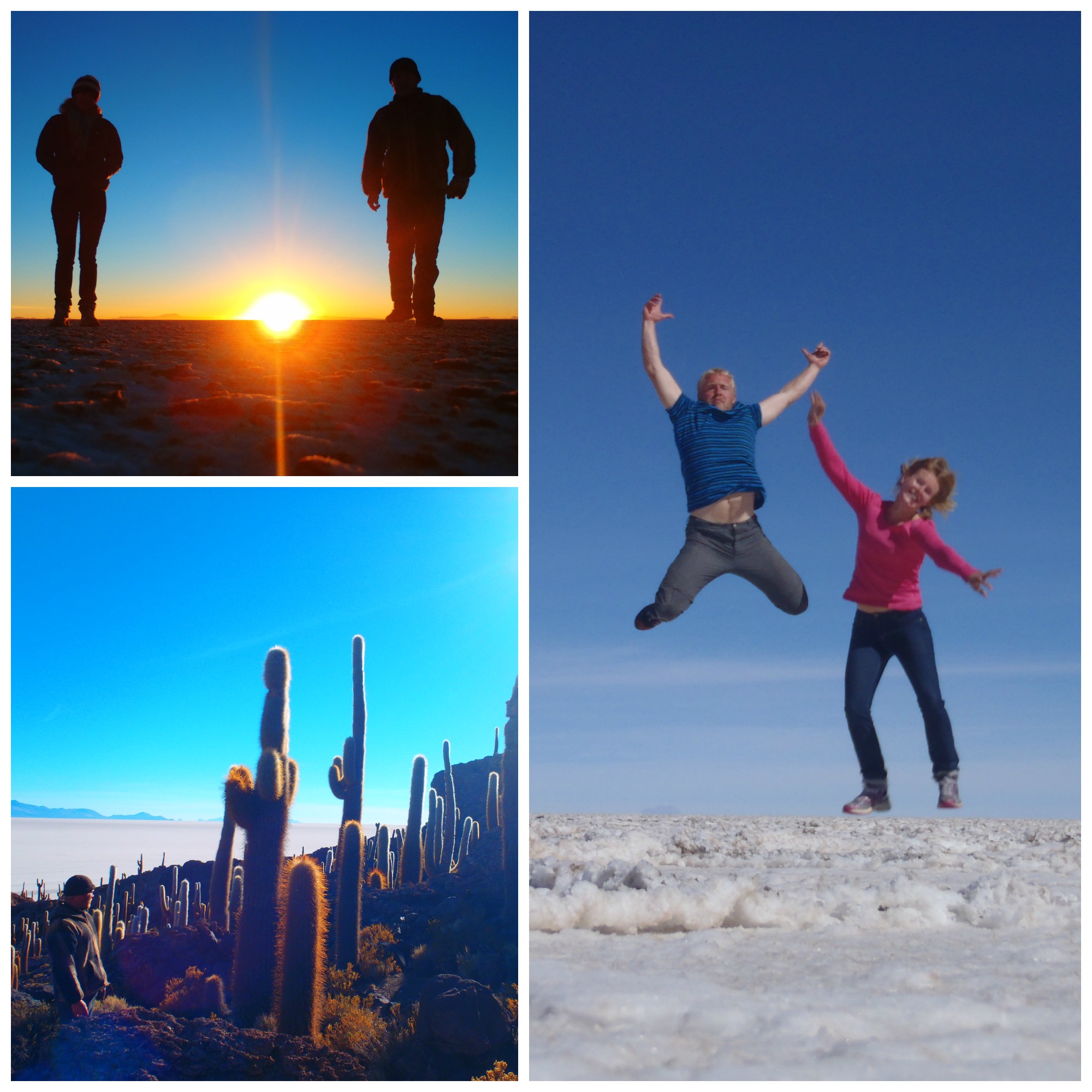
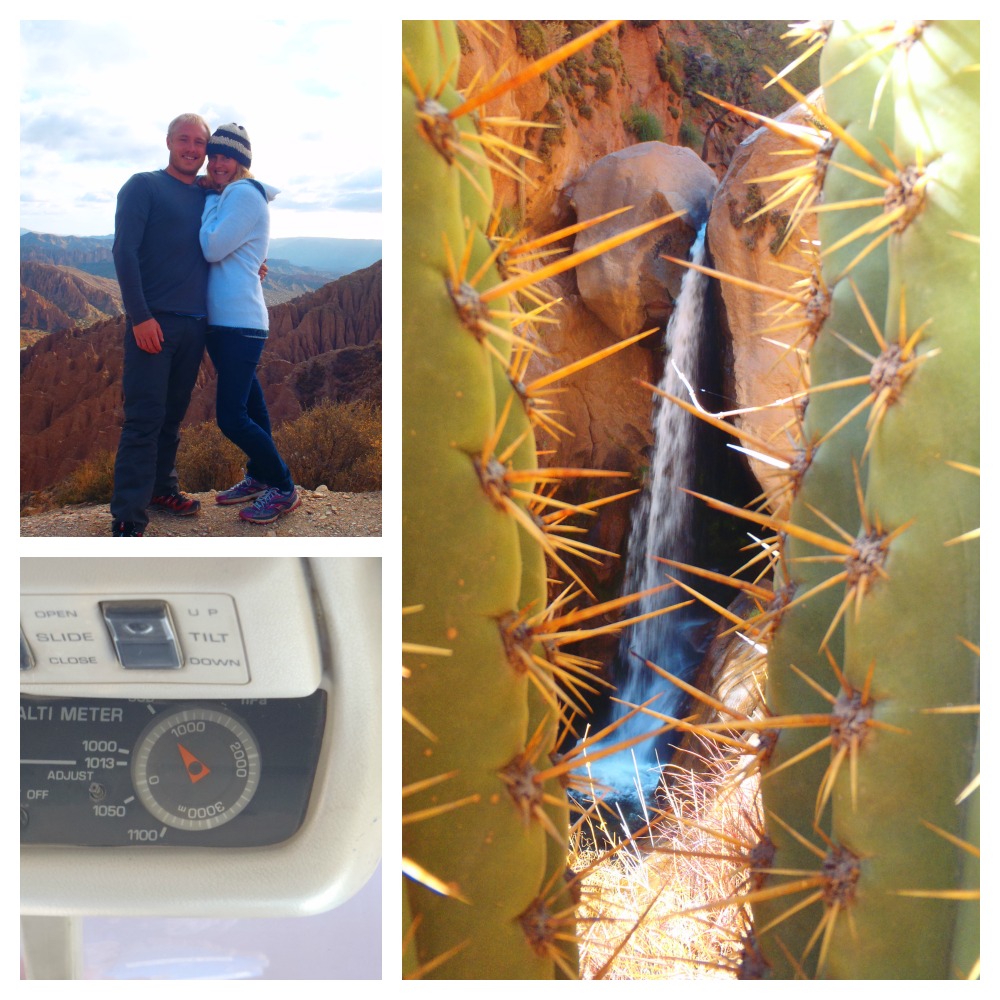
While our guide poured water into the radiator we had cake and coffee for breakfast (pre-prepared by our lovely Bolivian cook) and took the quintessential ‘look at us we’re at the Bolivian salt flats’ photos. Our guide got the car running again, but the rest of the day was spent driving slowly and nervously watching the temperature gauge. Around lunchtime we stopped at Isla de Pescada, an island of huge cacti in the very middle of the salt flats. This was the oldest place Joel and I had ever been – at over 200 million years, this island was once a coral reef out in the middle of an ancient sea in the time of dinosaurs. The island itself was made up of coral skeletons and volcanic rocks, and the views across the salt flats were incredible. I did my best to stamp the memory of that place into my mind – I had never been somewhere so mind blowing.
Tonight we’re off to La Paz so I can do a little work and we can enjoy the markets and nightlife. We’re planning a 3-day visit to the Bolivian Amazon at the end of the week. It’s fair to say that life is pretty good these days!
 Journeys in my jandals
Amazing story! Love your writing, slightly jealous about all the adventures :), have an awesome time, and stay safe! X
Great blog and great adventures Alex. I’m loving reading about your travels x
Thanks for sharing your exciting adventures Alex and taking us to places we will never ourselves experience. X
Love the story! So vivid, I feel like I was there with you guys!! Xo
Load more pictures please Ron