Perched high in the Peruvian Andes, sandwiched between soaring emerald peaks and dramatic valleys, lies Machu Picchu – one of the seven new wonders of the world. This ancient citadel is tangible evidence of the Incan Empire at the very peak of its existence; its masonry, devoid of mortar, is so perfect that its cracks can’t even be penetrated with a pocket knife blade. The Incas built Machu Picchu nearly 600 years ago, moving, shaping and fitting huge pieces of granite stone together without the use of iron, steel, wheels or modern tools. Machu Picchu’s geographical splendour and great feats of engineering were spectacularly impressive; but what Mum, Joel and I loved the most was the 4-day Inca Trail hike that led us there. ‘Love the journey,’ my friend Paula is constantly telling me, and this is one of many times on our trip where the journey was just as incredible as the destination.
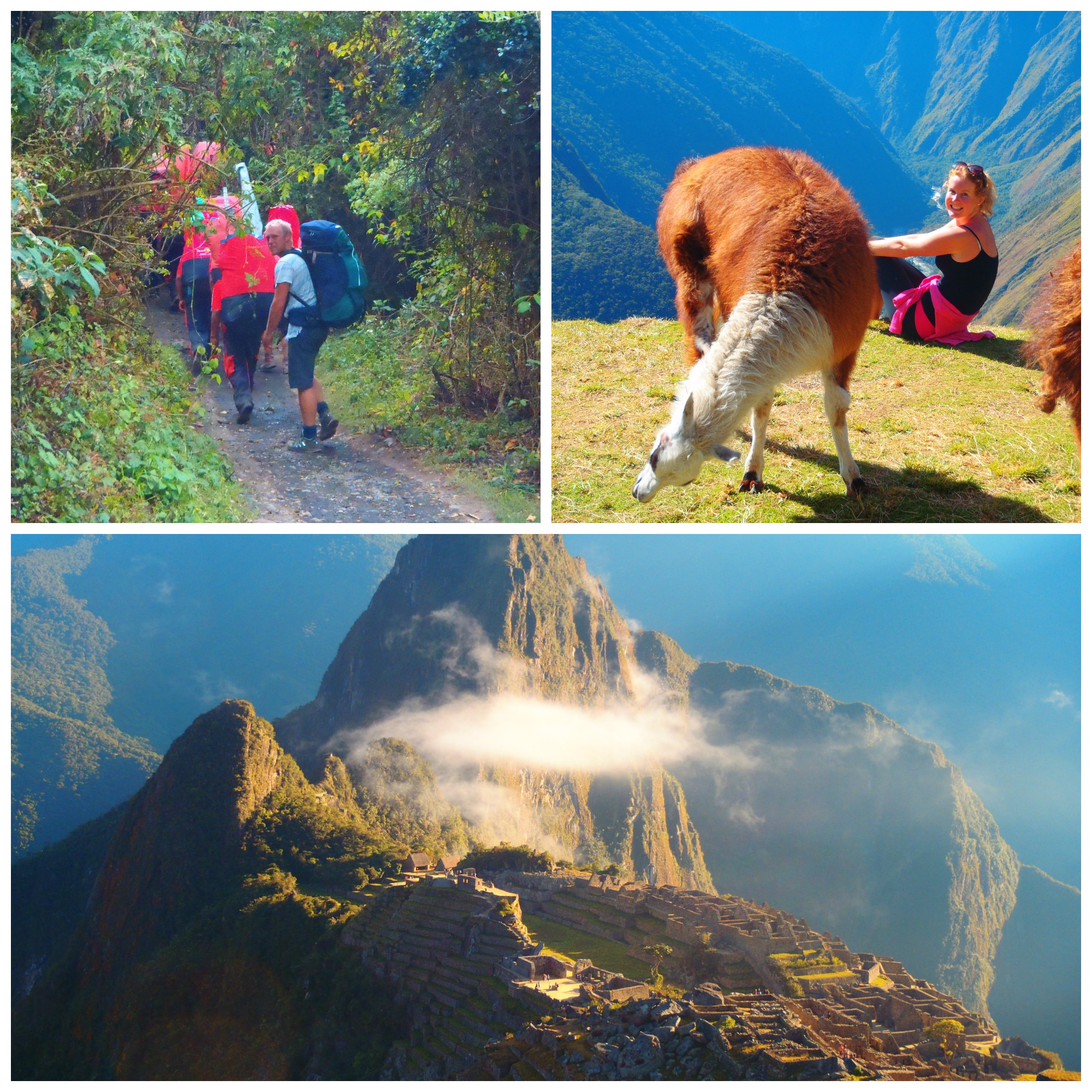
Forty-two kilometres of steep mountain passes, river crossings, high Amazonian rainforest and stunning Andean views makes up the Inca Trail – the most commonly used of the 8 (!) paths the Incans constructed that led to Machu Picchu. There is simply no substitute for travelling to Machu Picchu the way the Incas themselves did. Also called the ancient royal highway, the nobility of the Incas would walk this very same path to Machu Picchu as a pilgrimage to their gods once a year. As a result, there are a number of impressive Incan ruins dotted along the track; many of which were used as accommodation for the nobility on their journey. We chose to do the Inca Trail to experience this ancient pilgrimage for ourselves – and it was one of the best hikes I’ve ever experienced.

Day one began with a 3am wake-up call and a short drive to the Sacred Valley where the trail begins. The first day is a dirt track; it used to be entirely paved in stones but the Incas removed them so the Spanish wouldn’t discover Machu Picchu. And they succeeded – it was American professor Hiram Bingham who was the first European to set foot in the ancient city. The trail itself is very popular with tourists, and Joel and I made an effort to push away from the crowds by striding out in front, keeping up with the speedy porters who were carrying all of our food, tents and belongings. Mum made friends with an English girl in our group who liked walking at her pace, so we were all happy. Undulating terrain, stunning views of a snowy glacier and a short, sharp uphill to camp characterised that first day. At night we fell into bed, exhausted and excited for what lay ahead.
Two tough, high altitude passes – one over 4,200m – characterised day 2. Even though it was the most challenging, this was my favourite day – isolated valleys of verdant green, punctuated with ruins, caves and Amazonian flowers had me singing to myself and grinning the entire time. I waited atop the highest pass for Mum so that we could appreciate the views together, and so that we could leave a little message atop the peak for my uncle. Phil passed away years ago but would have been 60 on that very day we were hiking the trail. It was the closest Mum would ever be to heaven, and it was a pretty special place to stop and remember him.

After the highest pass, Joel and I pushed ahead once more, enjoying the feeling of having the entire trail to ourselves. Spectacular ruins awaited us towards the end of Day 2 – called ‘little Machu Picchu’, they were high in the valley, with views over the Amazon and the mountains. Many thought that these ruins were used by doctors and chemists, who would test plant remedies after gathering them from the verdant jungle below. Enjoying something so ancient and special by ourselves was pretty magical.

The morning of day three dawned clear and blue, and Joel and I set off once again before the crowds, with Mum walking an hour or so behind. We were rewarded with a stunning cloud forest and views of Andean peaks winking in the distance. The Andes are one of the most beautiful, rugged mountain ranges I’ve ever seen, and the birds, flowers and plant life had Joel mesmerised. Descending from the final pass of the day we heard a train horn in the distance, slightly ruining the feelings of blissful isolation that had formed from the trail. The train offers a different option to the Inca Trail for tourists wanting to visit Machu Picchu, and we couldn’t help but resent the intrusion. Arriving in camp early we enjoyed a lazy afternoon eating and napping and getting excited for the big finale the next day.
Day four: We awoke at 3am, packed up and boosted it to the gate; the first people camped outside the checkpoint so that we could race to Machu Picchu for dawn. Once the gates opened at 5.30am, Joel and I raced over the last hour and a half of path, an eerie, somewhat spiritual feeling settling all around us. Ascending the final steep set of stairs to the sun gate, we looked down into the valley and gasped: Machu Picchu in all her glory lay hanging in the mist, looking prettier than any photo we had ever seen. But that feeling didn’t last – we saw the first train load of tourists being let into the gate far below us. We had thought that by getting through the checkpoint as early as possible, we might be able to have the ancient ruins to ourselves for a few minutes, but it was not to be. After exchanging a few expletives, we walked down the perfect stone path and into the belly of the ruins. This was it – Machu Picchu – and she was as glorious as ever.
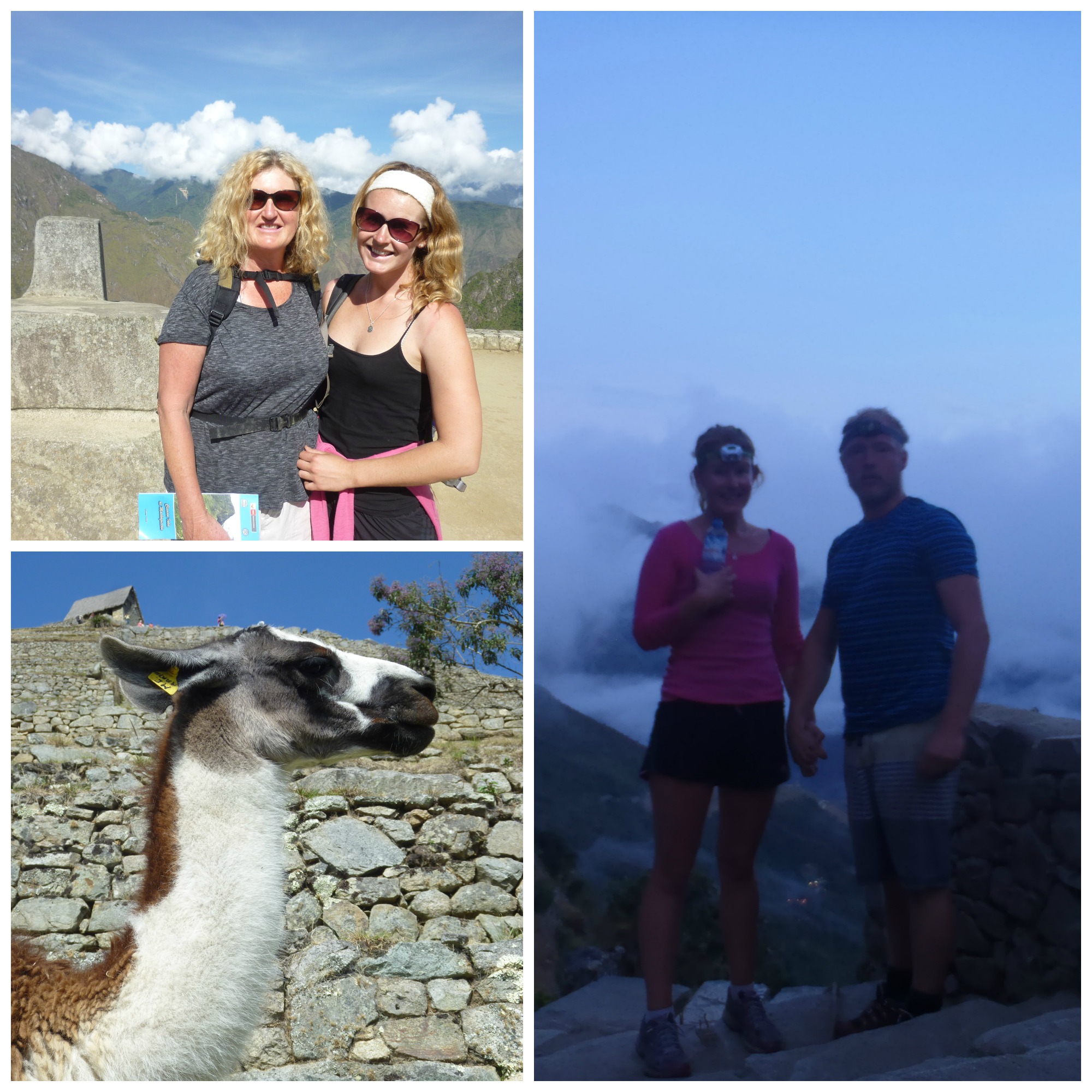
Her dramatic complex of temples, palaces, plazas and homes still puzzles archaeologists, and not knowing what the citadel was used exactly for was both curious and fascinating. Was it a ceremonial site? A retreat for ruling elites? A military stronghold? The location of the ruins means that it would have been well-suited for any of these purposes. Our guide told us that after Cusco was invaded by the Spanish, the Incans sent their princesses to Machu Picchu so that they were safe. When Bingham discovered the ruins in 1911, his findings proved this theory – skeletons were scattered around the citadel in various places, their hip width proving that they were female. Nobody knows for sure, but it seems like the princesses had contracted diseases and retreated to different parts of Machu Picchu to pass away in peace. The thought of these young girls living and waiting in such an isolated place, knowing that their people and their culture was being destroyed only a few hundred kilometres away, is pretty horrific.
Down in Machu Picchu we met up with Mum and the rest of the group and enjoyed a short tour of the ruins. I knew how much reaching this place meant to Mum – she had been training for the Inca trail for months with it being one of her bucket list dreams – and I was so proud of her. People half her age had struggled with the trail, and she had completed it with a determination and fortitude that was truly admirable. The look on her face as we explored the ruins together said it all.
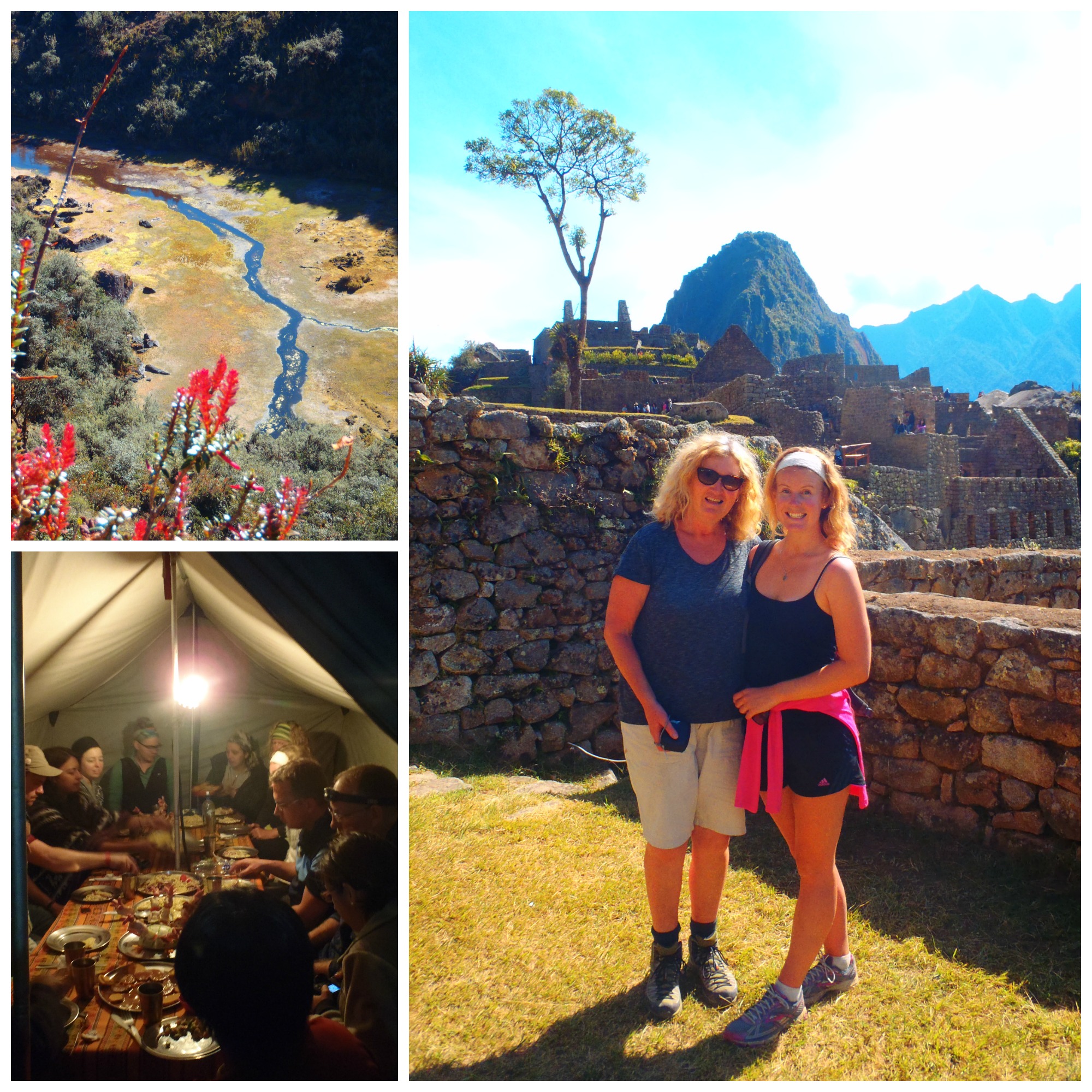
Machu Picchu itself was almost an anti-climax after the beauty and isolation of the Inca Trail. Suddenly, we were surrounded by hundreds of people, and it was somewhat overwhelming. Before we had descended into the ruins, Joel and I had sat far above them and admired them from afar – getting away from the crowds made it more special, and this gave us the peace and quiet to slowly soak it all up. It truly is a special, spiritual place; but it wouldn’t have been nearly as amazing without us having hiked the challenging Inca Trail to get there.
In this case, the journey – the Inca Trail – was just as important as the destination.
 Journeys in my jandals
Awesome pics, I didn’t have a camera when I did it 20 years ago – didn’t have porters then either!! Brings back great memories xxx