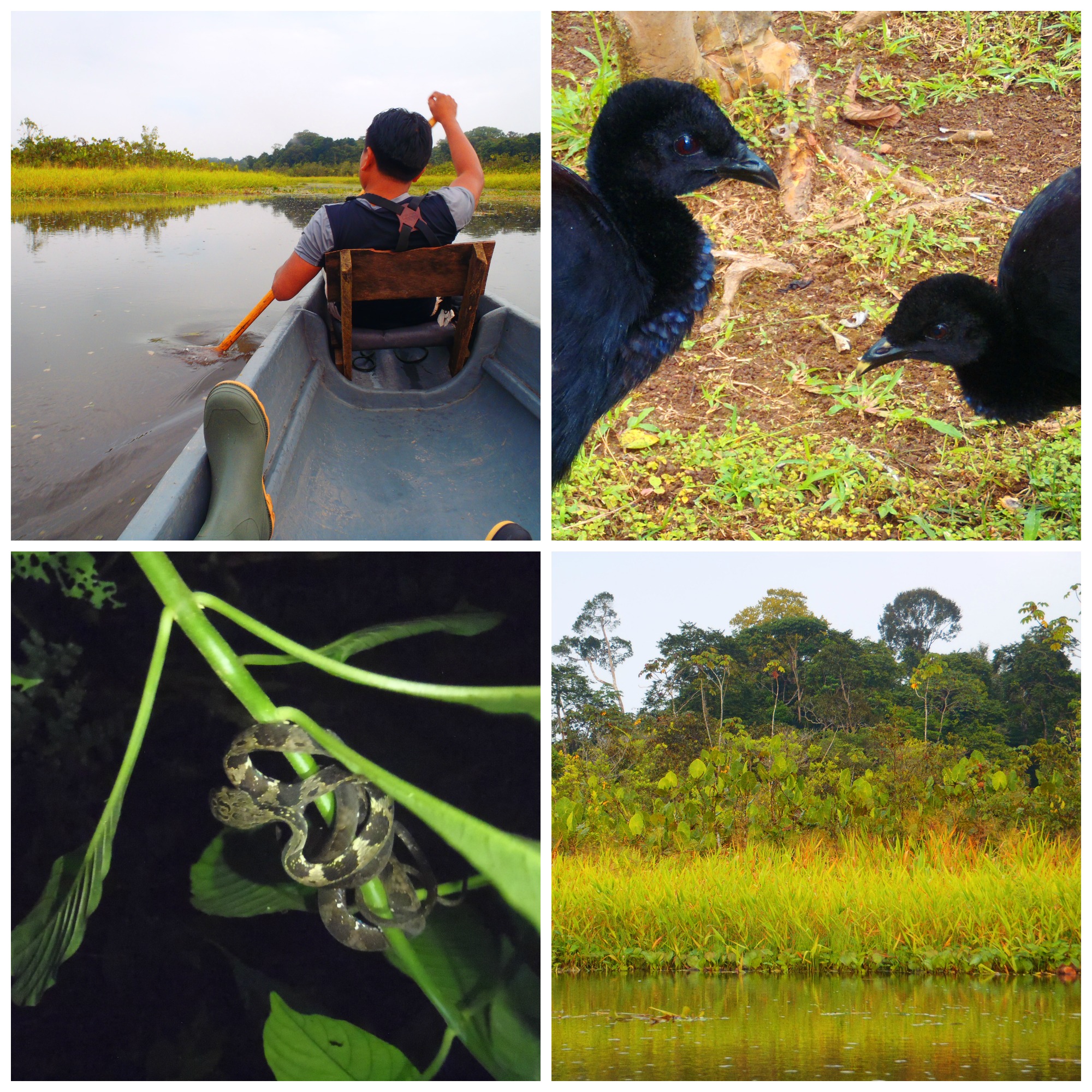
In the Amazon, the air feels different. Rich, thick, heavy; every breath tastes like a mouthful of pure oxygen. This was the first thing I noticed as we launched our canoe from Coca, a bustling town deep in the Ecuadorian slice of the Amazon Basin. We were on our way to Sani Lodge, a community-run initiative located on the edge of a lagoon, for a 4-night Amazon tour. It took 2.5 hours to make the run downstream in a fast boat, then a short hike and a one hour paddle in a canoe to get to the lagoon beside the lodge. Rounding the last bend in the stream, the thatched roof of the landing pier came into view – and it was better than we had imagined.

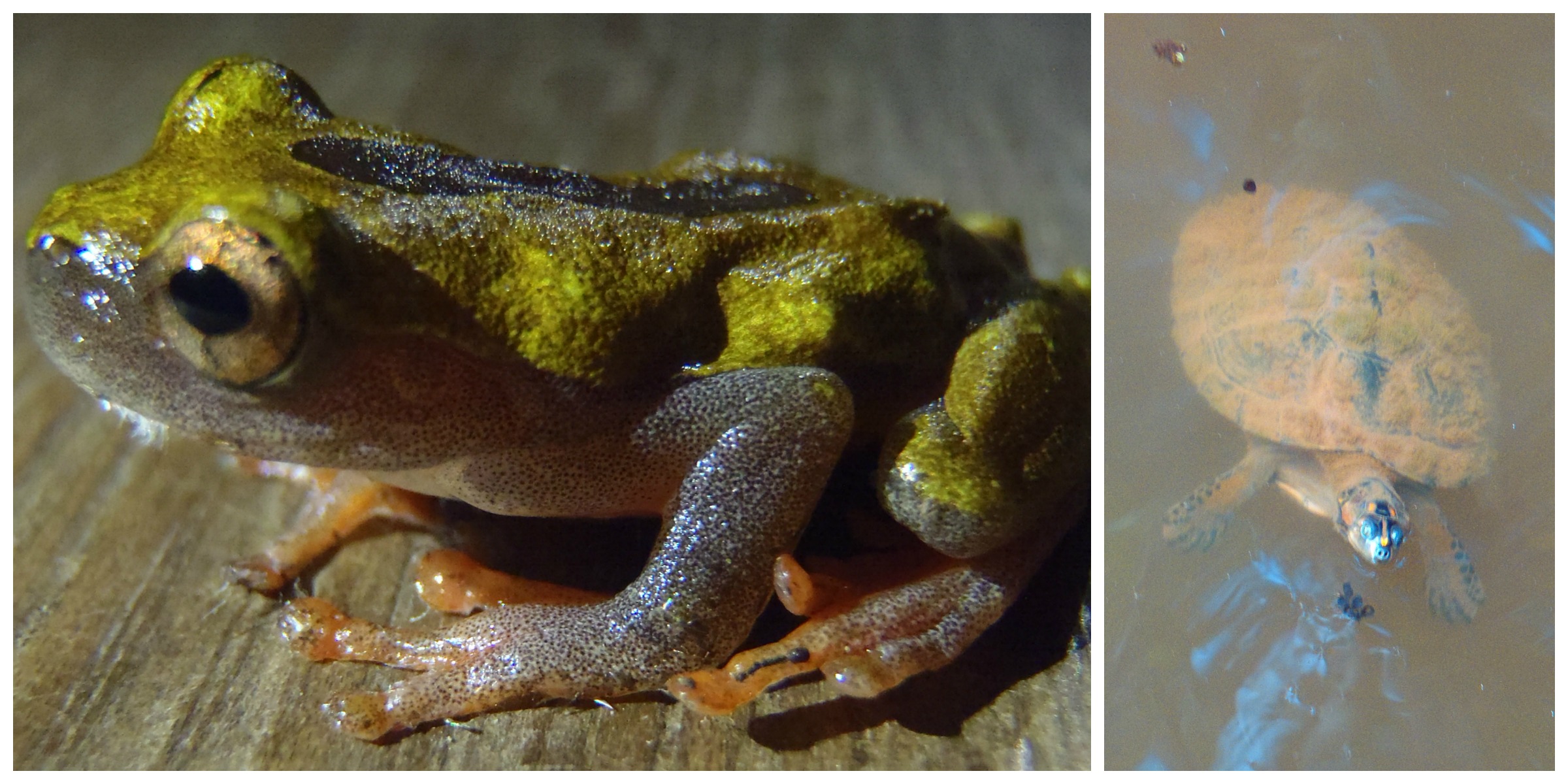
The setting was serene, colourful and alive. The lagoon teemed with fish, turtles, insects, birds and reptiles.
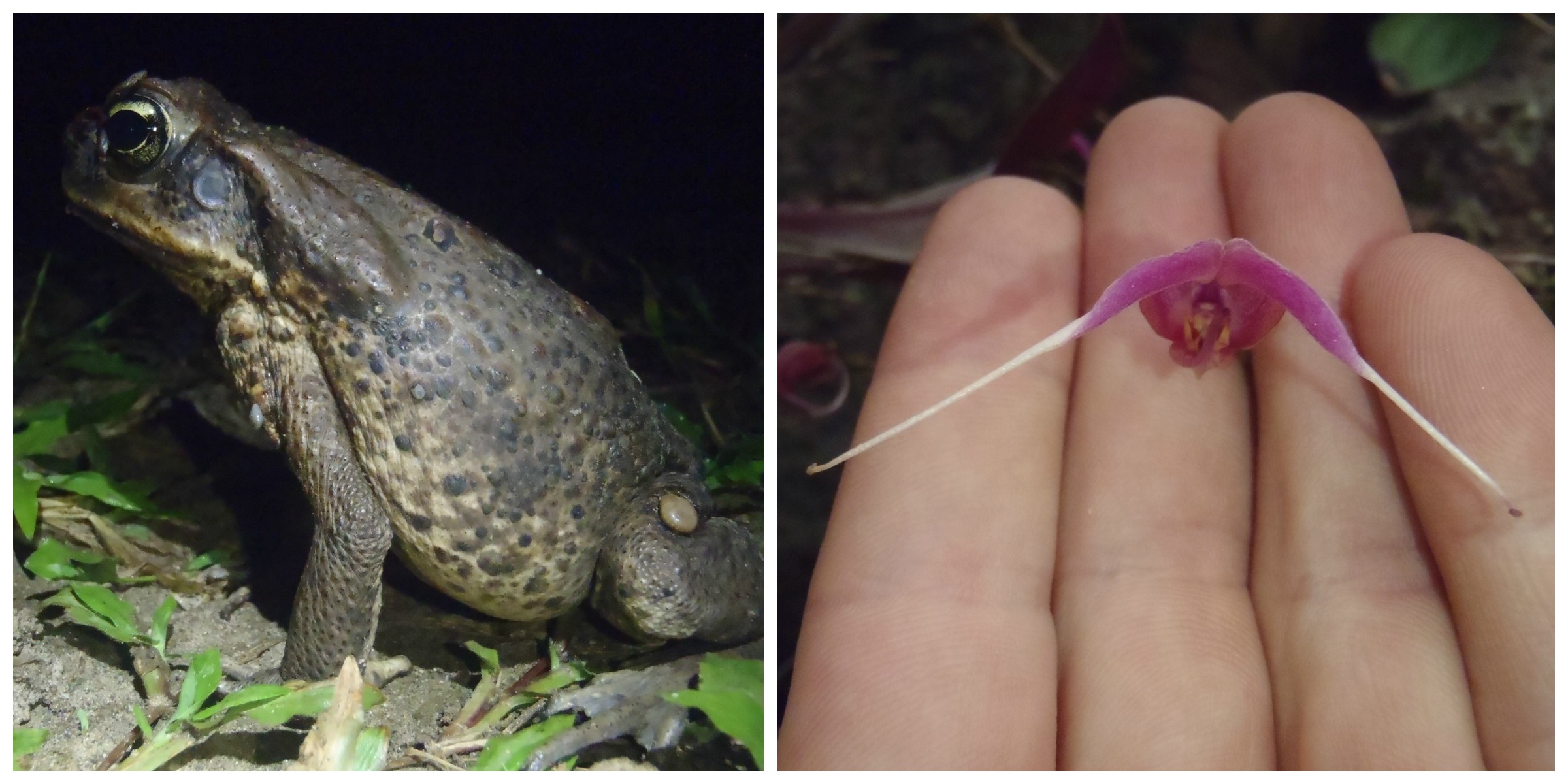
Large anacondas and much-feared electric eels lurked just out of sight, and prehistoric-looking Hoatzin birds chattered noisily in the trees around the shoreline.
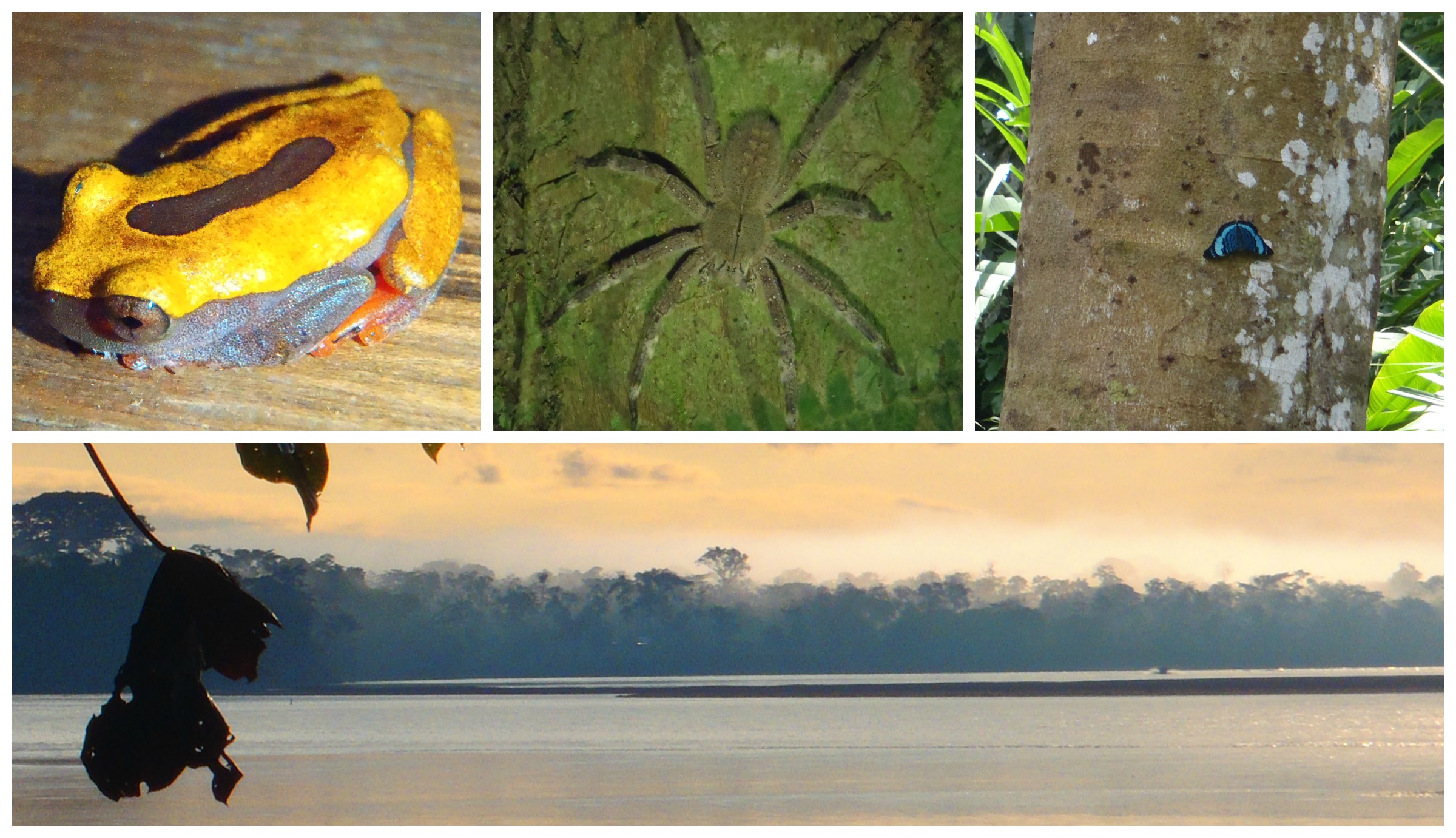
On our first evening, we hopped into a canoe with guides Jose and Wilfredo to go night time spotlighting on the river. As soon as the torches were switched on, it became obvious that we were not alone – a dozen or so Cayman eyes shone their eerie red glow back at us from the reeds bordering the waterway. Our guides paddled us over to them until we were literally only a metre or so away, regaling us with tales of tourists who had gone swimming in the Amazon basin only to be attacked by these toothy critters.
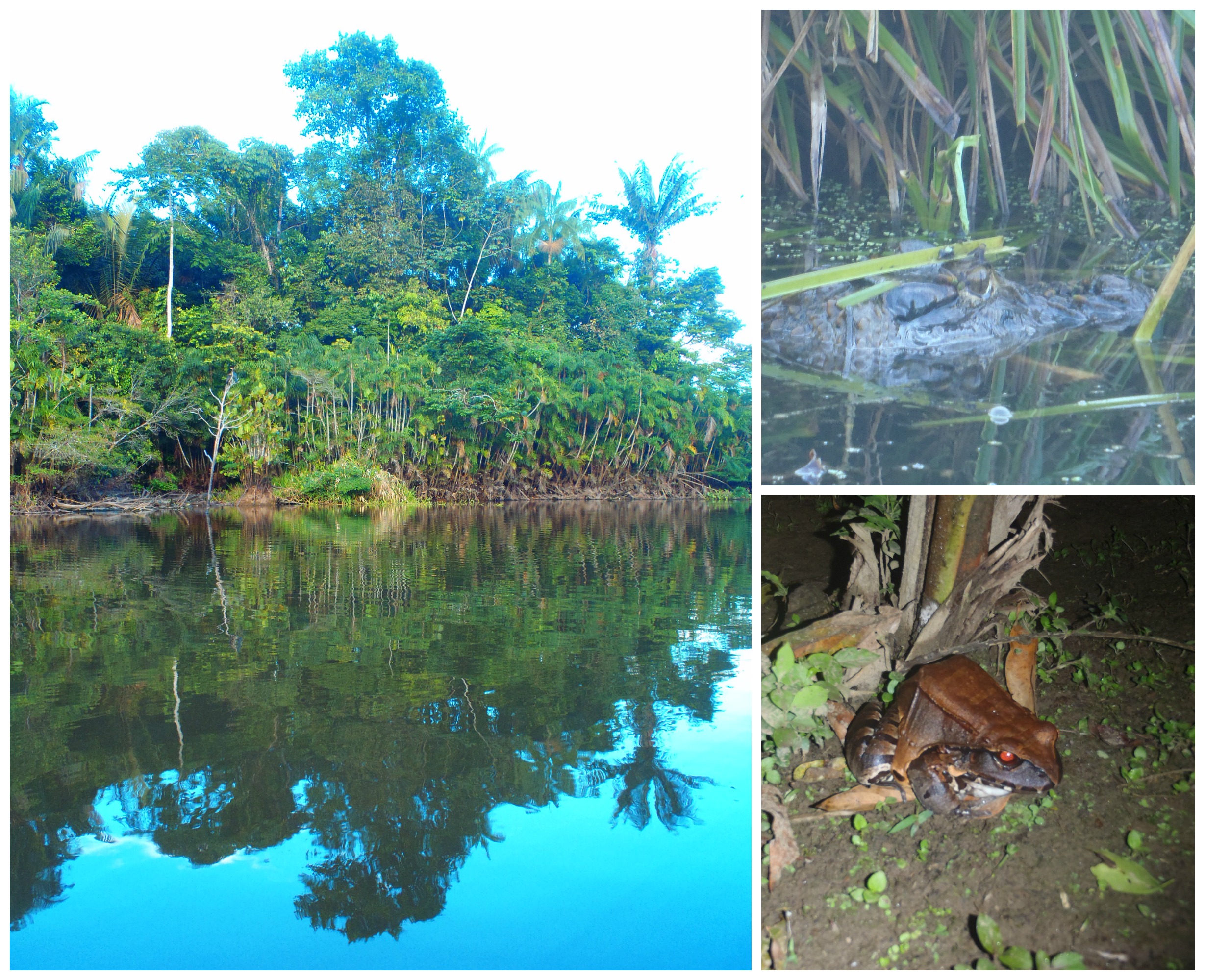
Point taken – no matter how hot it gets, we most definitely wouldn’t be jumping in the lagoon to cool down! The calm, inky brown of the water at night and the flashing lights of fireflies made us feel far from home, and excited for what lay ahead.

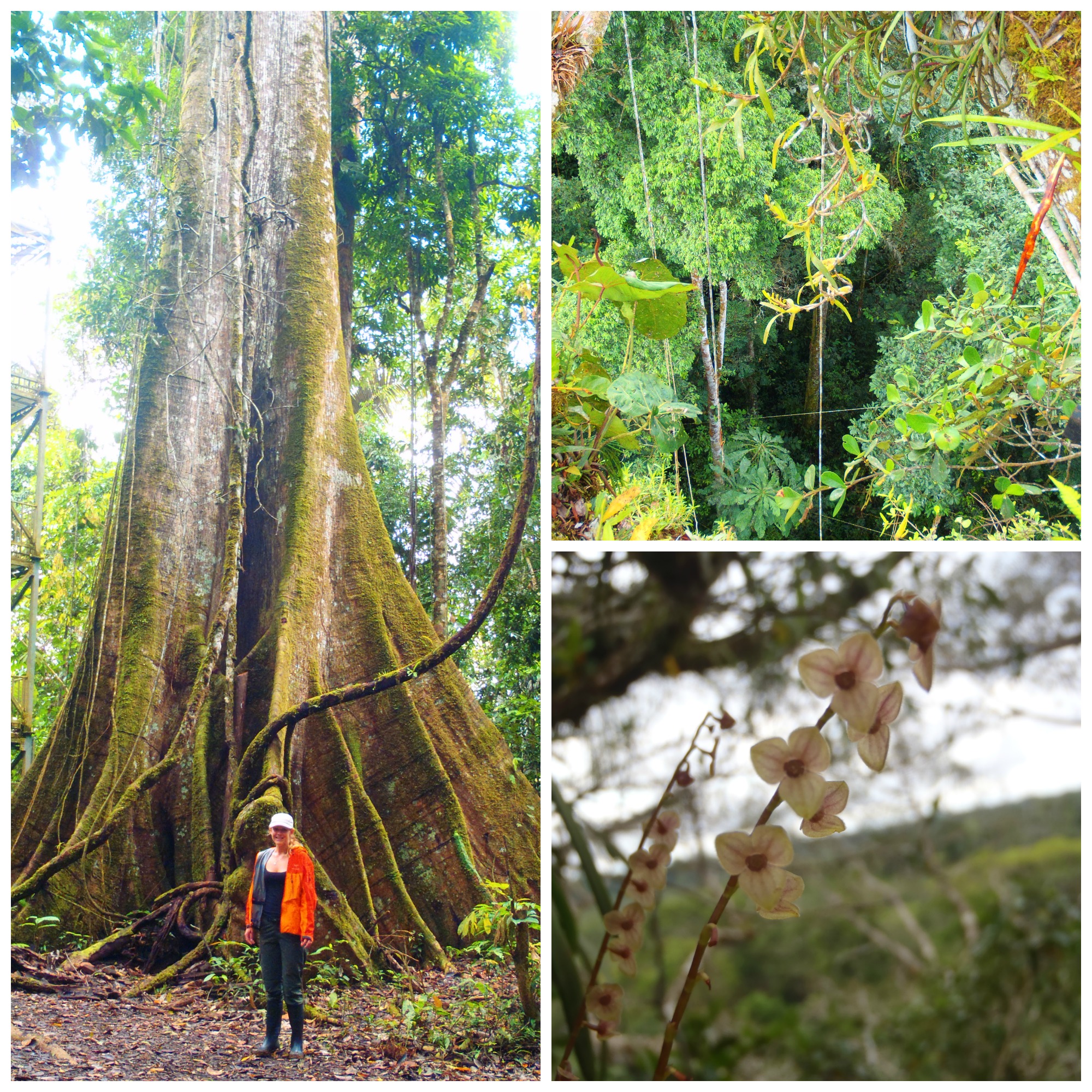
Each day began with a 5.30am start, a quick breakfast then a morning of wildlife spotting. We were joined by two very nice Germans; a father and daughter, who made up the other half of our small touring group. For our first morning at the lodge, we hopped in the canoe and were paddled up the lagoon in the direction of the viewing tower. Rising 37 metres from ground level and perched high above the forest canopy, a platform had been built in the crown of a giant old Kapok tree that has watched over this part of the jungle for an estimated 700 years.
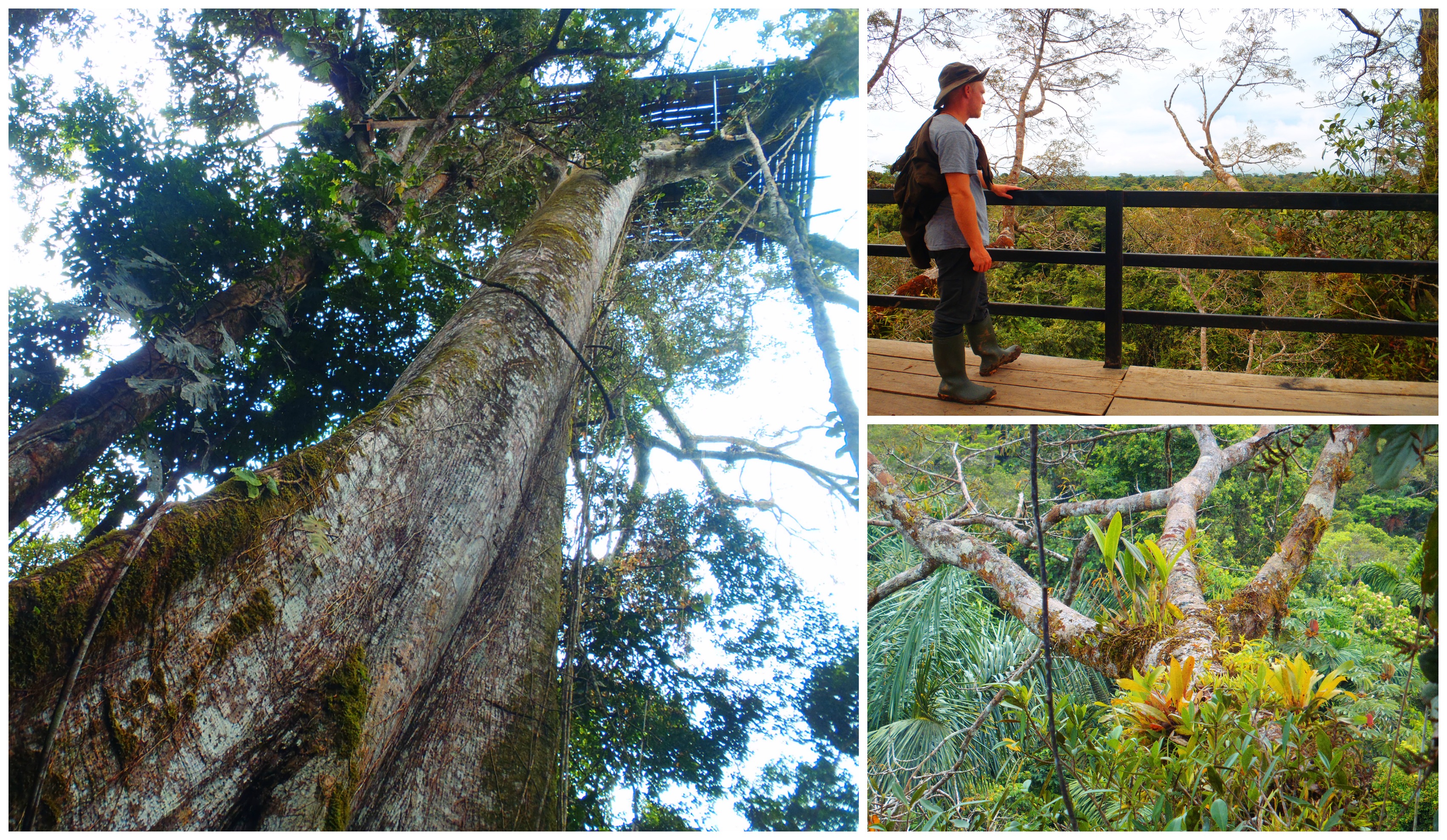
You couldn’t have asked for a more magical location from which to watch the jungle awaken.
It took just minutes to spot the first wildlife. A large group of red howler monkeys lay about in the branches of a tall tree nearby and regular flocks of Chestnut-fronted Macaws, Blue and Yellow Macaws, Amazon Parrots and Parakeets would fly overhead, chirping noisily. We were thrilled to also spot three separate species of Toucans, easily picked out due to their large and colourful beaks, along with a woodpecker who worked intently on modifying a nearby tree. This was so much better than the Zoo and the diversity and sheer volume of wildlife exceeded our expectations.

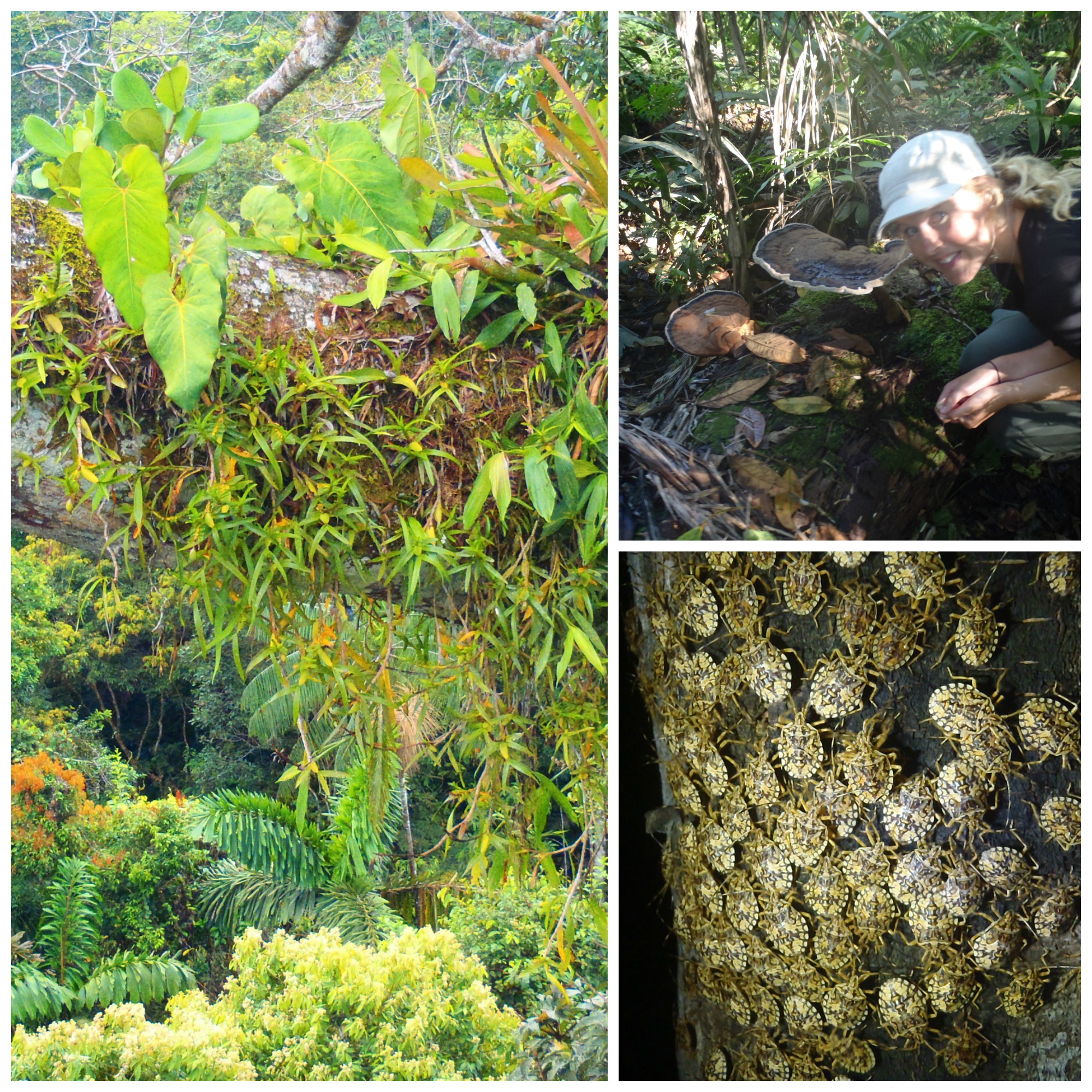
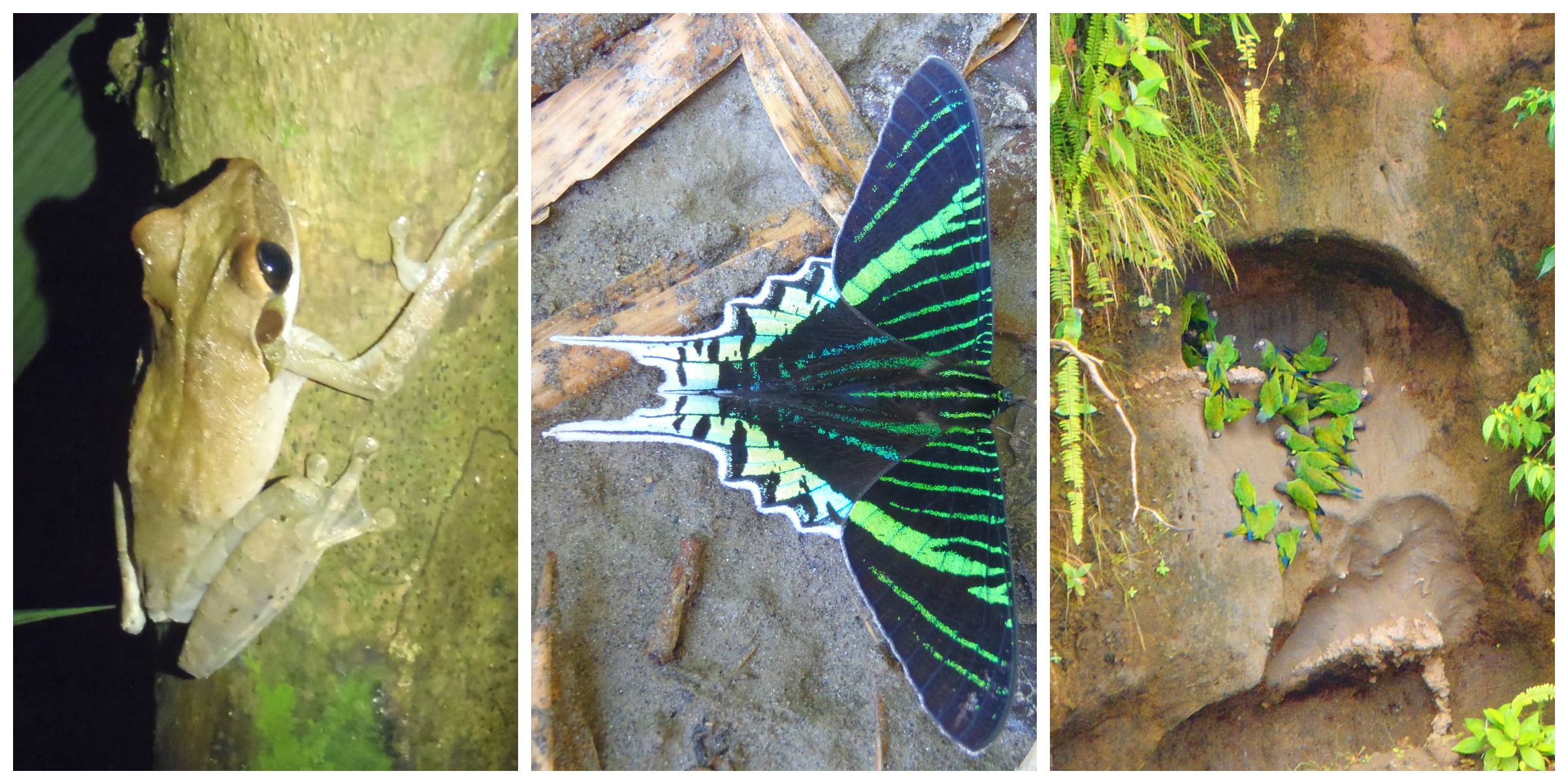
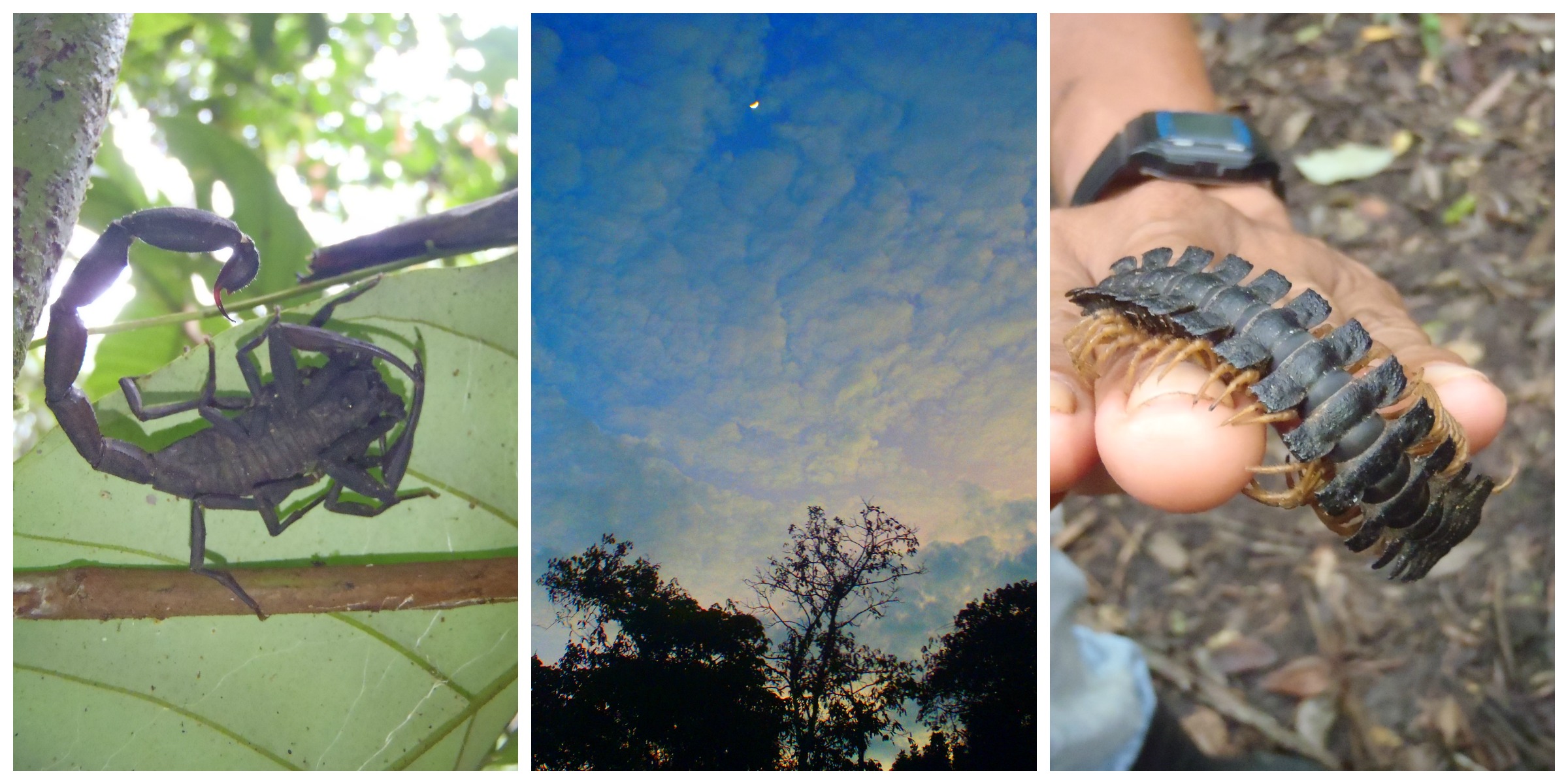
Afterwards, a hike through the lush jungle understory revealed a myriad of bugs, birds and fascinating plants. Our guide found a giant millipede and a tiny frog, and we were made to consume some special ants that had gathered in the centre of a leaf (these guys make lemon-flavoured lavae, and when hunters get lost in the jungle, they eat them for energy). Butterflies of the most vibrant colours flew around our heads – pinks, blues, greens and reds; they were beautiful in their diversity. Over the course of our Amazon stay we would have seen maybe 50 different species of these little critters.
Afternoons were taken up with lunch and a little nap (we weren’t used to such early starts!) before heading out again at around 4 or 5. We tried our hand at piranha fishing with no luck, but the half dozen or so squirrel monkeys we saw jumping above us through the trees made the experience awesome.
After dinner each night, Joel and I would head down to the dock to spot turtles and caymans, look at the stars and listen to the noisy night time sounds of the jungle.
One day was spent visiting a parrot clay lick, hiking through the jungle and then having lunch with the local Sani tribe who run the lodge. A parrot clay lick is where parrots fly down to cling to a section of clay cliff and lick the clay for nutrients. We positioned the boat a few metres away, and watched as the parakeets flew closer and closer to the cliff, trying to gain the confidence to land on the clay. Much like a lion watching a watering hole, a colourfully patterned boa constrictor waited in a nearby tree, curled menacingly around a branch. One parakeet got unlucky and the snake grabbed it and slowly squeezed it to death. All we could see through binoculars was the tail feathers of the parakeet sticking out of the bottom of the snake’s coil. I could almost hear the narration of David Attenborough – this was Animal Planet at its best! Seeing one of their mates get the ‘old chop’ didn’t seem to bother the rest of the parakeets, who came down in large numbers to exploit the mineral rich dietary supplement of the clay.
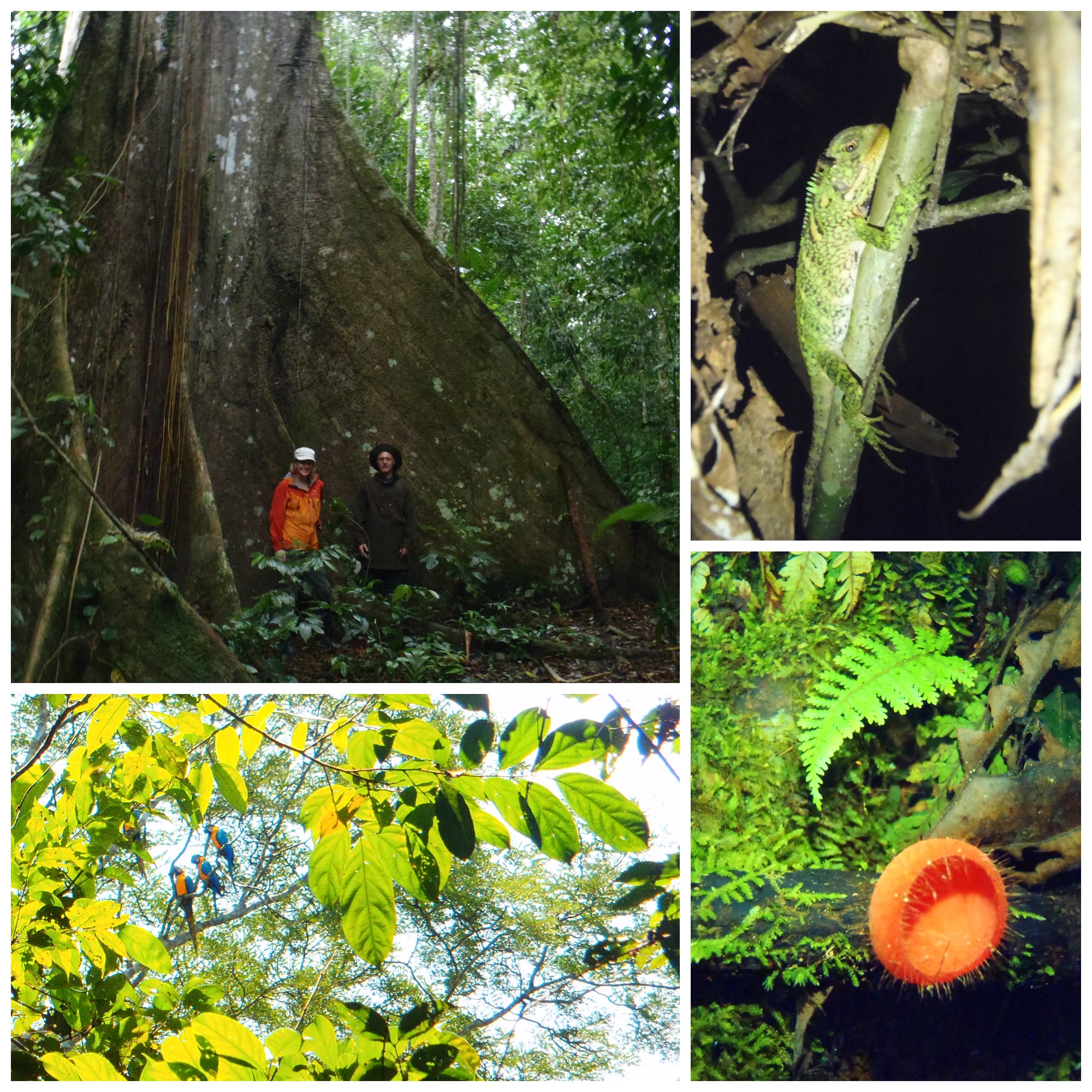
The sticky, humid hike that followed revealed a species of bird that we had both been crossing our fingers to see. While hiking, a loud squark came from far above us in the trees, and Joel turned around to spot not one, but four blue and yellow Macaws perched on a branch looking down at us. These birds are now endangered and quite rare to see up close, so getting to watch them thriving in the wild was just magic. This was one of the highlights of our trip here.

The authentic Amazonian lunch in the village that followed was delicious. Shy local ladies in authentic dress cooked fish caught in the river, wrapped in giant leaves, over hot coals. Combined with plantains (savoury bananas), palm hearts and grilled white cocoa beans, the meal – which we ate with our fingers while sitting on the floor – was a real experience.
Every time we would return to our cabin at the lodge, the lodge’s two grey-winged trumpeters (birds a little bigger than a pukeko), would run up to us like dogs and then round us up to run races on the grass with them. These two little guys were so friendly, they would even come into our cabin and sit on the bed with us. Partial to scratches and pats under their wings, we named them Muriel and Clark and treated them like our pet dogs for the few days we were there. Back home in New Zealand we would be pretty keen to have them as our own pets!
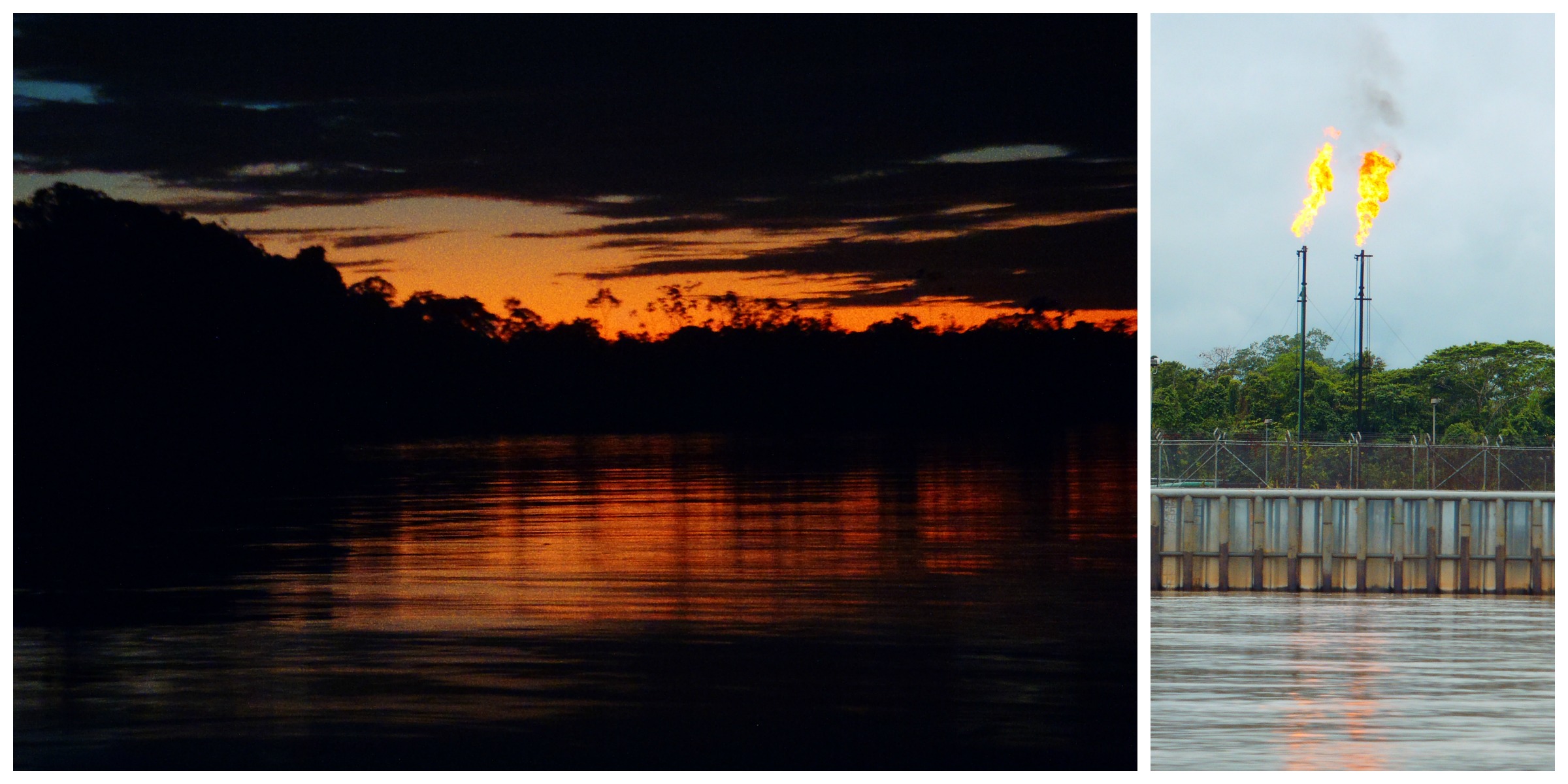
For anybody who dreams of visiting the Amazon one day, we would urge you to come in the next year or two. Any longer, and this place is going to be wrecked for good. On our boat ride up the river Napo, we saw numerous sights of oil extraction; flames burning off gas licking high into the air. The graveyards of the sites where the wells have run out are horrific – twisted, rusting metal lies in the water or on the banks of the river, a sinister legacy to what once went on. We learnt from Jose that Ecuador has huge debts with China, and that the government here has just granted the Chinese permission to drill for oil in the Yasuni National Park. This large part of the Amazon is one of the most diverse and untouched places on earth – and, unfortunately, contains more than 25% of Ecuador’s oil reserves. Jose is worried – at least the American and Canadian oil companies pretend to care about the environment, he said, but the Chinese are notorious for being unscrupulous when it comes to the natural world. Joel and I feel lucky to have visited such an incredible place before it is ruined.
Our jungle adventure is far from over. This experience has been mind-blowing. Everything you imagine when you think of the Amazon Jungle is true – there are piranhas, a lot of venomous snakes, giant anacondas, alligators, parrots, formidable insects and massive trees. A night lost in this jungle would wreck your nerves no matter who you are. We haven’t visited anywhere more incredible for its flora and fauna than the Ecuadorian Amazon, and we’re pretty keen to explore it even further. By a stroke of luck, in a few days we are heading even deeper into the wild to stay with a tribe for the ultimate experience – one that can be had only by invitation. These guys are a 13-hour boat ride away from civilisation, and haven’t come into contact with many gringos at all.
Pink river dolphins, jaguars and harpy eagles, here we come!
 Journeys in my jandals
Joel and Alli this is the coolest place,,,, i reckon the filth from china will ultimately be stopped from destruction of these jewels,, things are changing ,slowly ,in the end this diversity will survive the scum and filth that threaten it ,,soon oil will be obsolete as primary fuel and nature will cover over the scars these mongrels impose ,,remember all this has evolved since the last cosmic blast ,,we overestimate ourselves long term ,i reckon man hasn’t been here long and won’t last if trash the jungles Fonterra are nz s biggest environmental vandals ,,I oppose them often by letters ,,,,the power of the written word can have an effect over time ,,as any journalist knows ,,take care love the photos DAD
Hey guys,
So great to read what you have been up to since we met you in the Galapagos! I feel the Amazon might be calling us…Far from the civilisation of New York and Sydney that we’ve just returned from ;)!
Looking forward to reading about your tribe experience – wow!
Victoria & Michael
Hey you cool kids! Ah I bet NY was incredible Vic, hope you managed some little ice cream indulgences – and yay for Mike being a proper Aussie now! Yup the Amazon is amazing, you guys would love it & go crazy for the epic photo op’s. Let us know if you want more Cusco/Peru recommendations. Alli & Joel 🙂 p.s flick us through the link to your blog!